




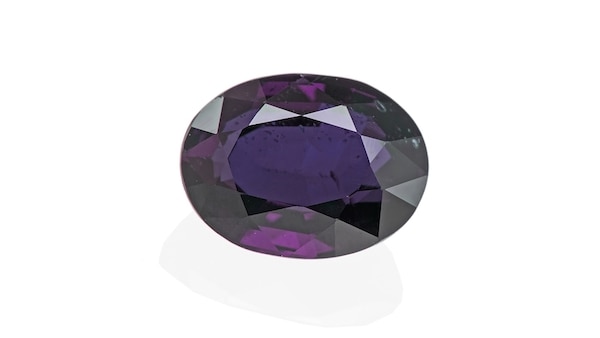
Dark purple chrysoberyl
Since about three years, we see at SSEF occasionally chrysoberyl samples of very dark purplish to purplish brown colour, sometimes of quite impressive size (>10 ct). Based on chemical composition, these chrysoberyls show distinct concentration of chromium, but no evident change of colour, thus do not fit the cr
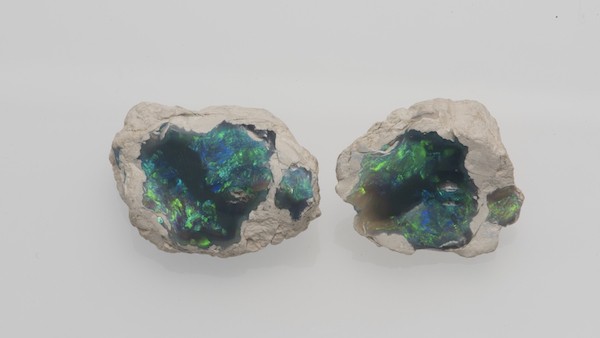
The allure of back opals
Opal comes from the Sanskrit upala and the Latin opalus, meaning “precious stone”. The Roman naturalist Pliny the Elder (A.D. 23/24 – 79) wrote that: “In the opal you will see the refulgent fire of the carbuncle (red gems), the glorious purple of amethyst, and the sea green of the emerald, and all these
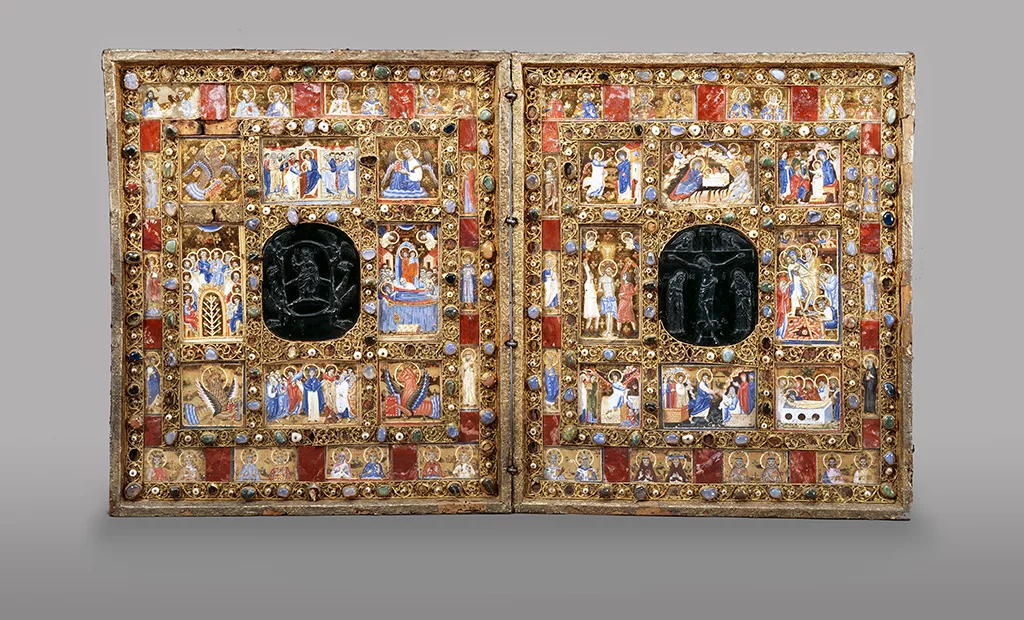
Gemmological study of the medieval Königsfelder diptychon
In 1298 AD, the king of Hungary Andreas II presented to his wife Queen Agnes a stone-set wooden altar piece as a royal wedding present. This small medieval artwork, known today as the Königsfelder diptychon, was originally made in Venice.
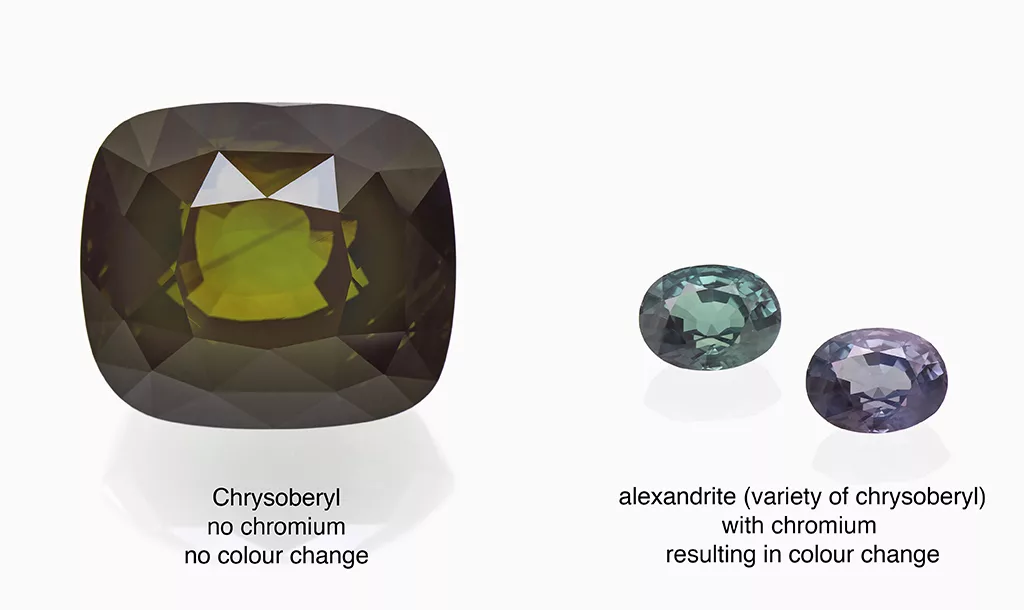
To be, or not to be, that is the question: chrysoberyl versus alexandrite
The mineral chrysoberyl BeAl₂O₄ is a highly appreciated gemstone due to its rarity, brilliance, and beauty and comes in attractive colours commonly ranging from colourless (chemically pure) to yellow, yellowish green, green, and brownish green to dark brown, mostly related to the presence of iron in its cry
A gemmologist’s delight: poudretteite, musgravite, taaffeite, and grandidierite
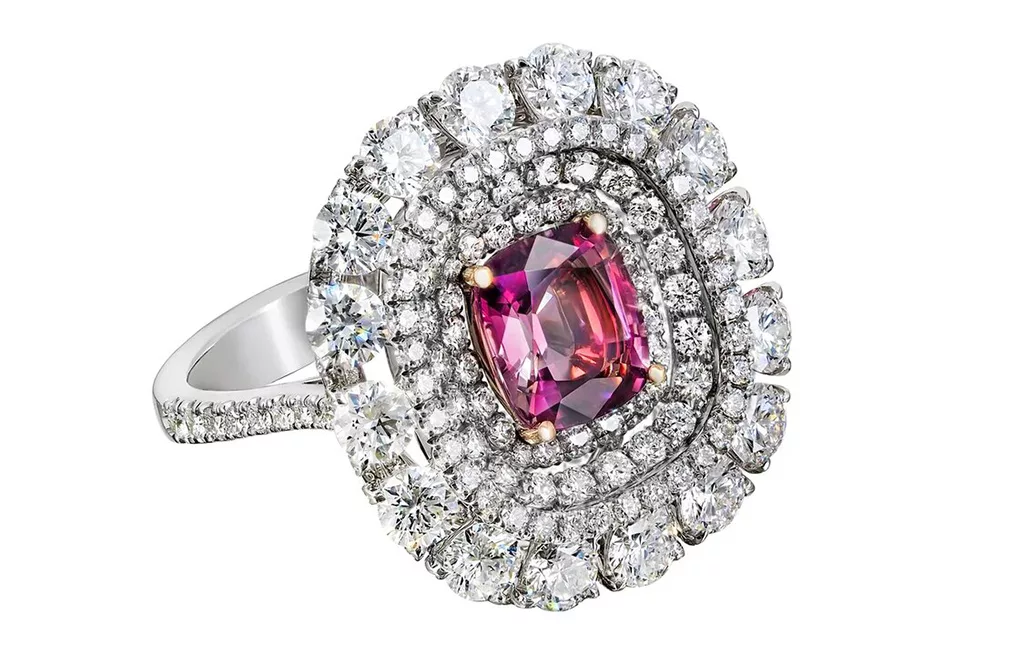
by Dr. M.S. Krzemnicki, first published in Facette 27 (June 2021) In recent months, the SSEF received again a number of very rare collector stones for testing. These included poudretteite, musgravite, taaffeite, and grandidierite of exceptional quality. Poudretteite, ideally KNa2B3Si12O30, is a very r
Deep purple vesuviatine from Pakistan
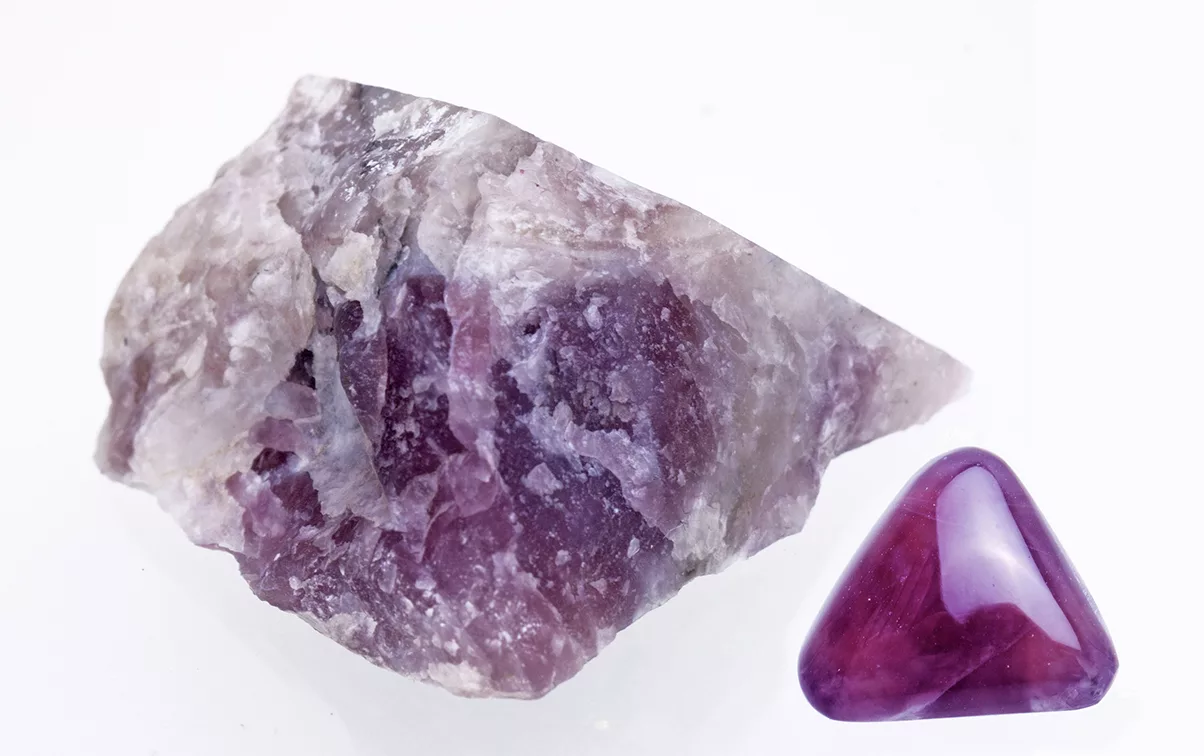
by Prof. H.A. Hänni, first published in Facette 26 (May 2020) stan has a number of gemstone deposits that are related to the collision of the Indian continent with the Eurasian plate, a consequence of global plate tectonic movements. The gem-producing areas lie in a thrust zone known as Karakorum Suture Zone.
Green spodumene sold as emerald imitation
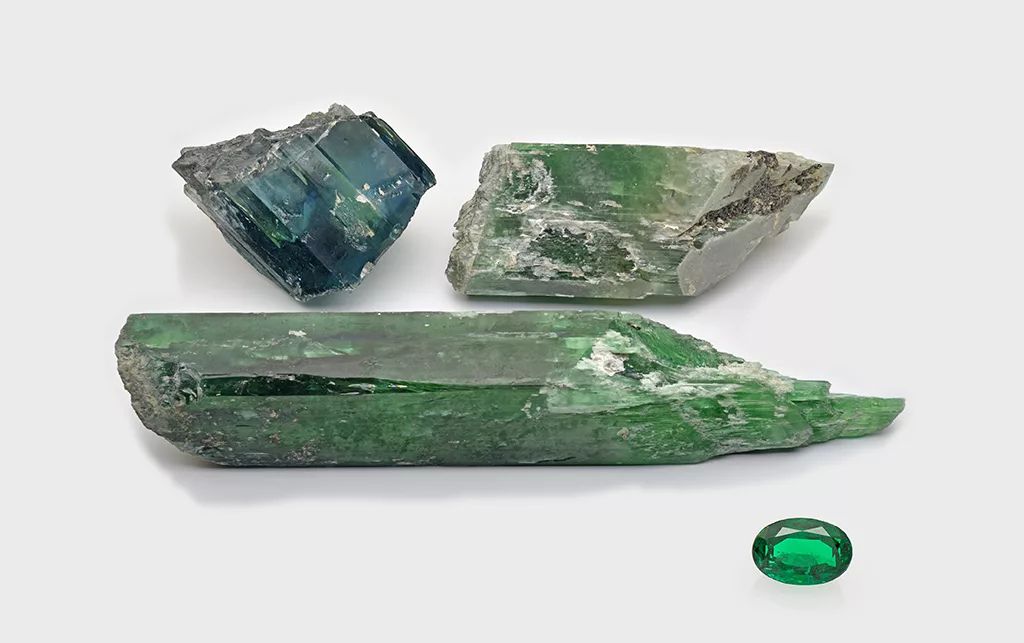
Spodumene crystals (longest item about 50 cm long and 5.9 kg heavy) submitted to SSEF as new 'emeralds' from Pakistan shown here together with a faceted emerald from Pakistan
Rare Earth Elements in Danburites
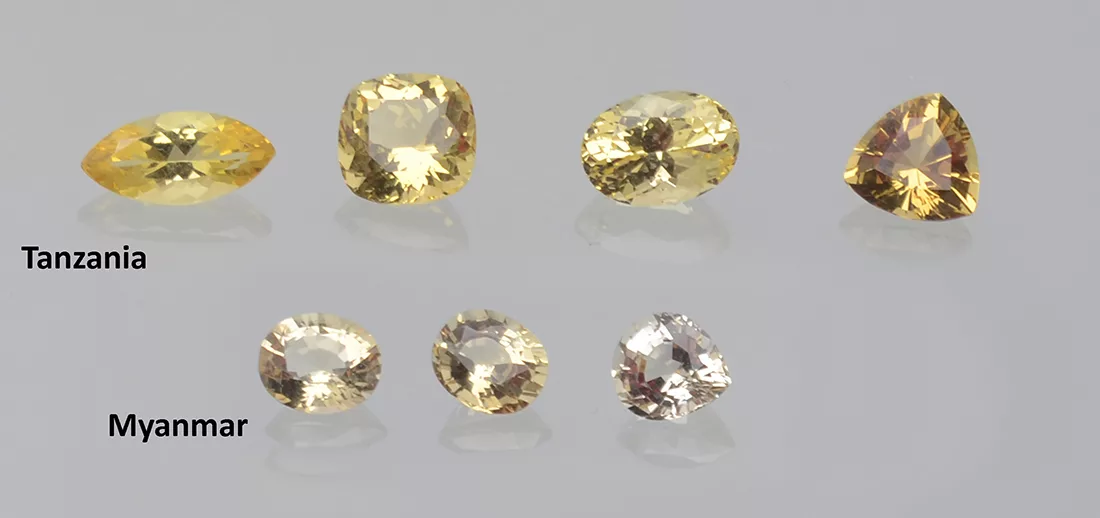
The calcium-boron-silicate danburite is a rather rare collector’s stone, mainly known in colourless to slightly yellowish to brownish colours from a limited number of deposits worldwide. Since 2013, new and attractive vivid yellow danburite has entered the gem trade. This new material originates from the Many
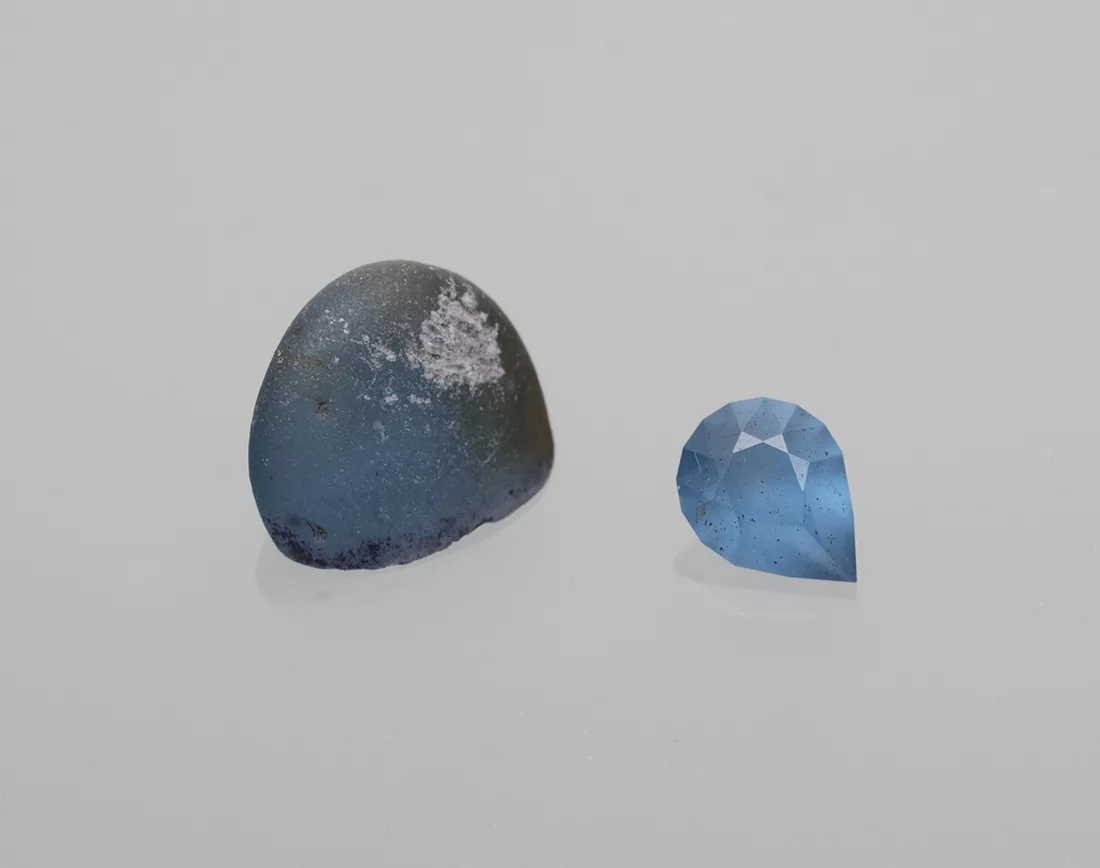
Polycristalline Kyanite
first published in Facette 22 (February 2016) The Swiss Gemmological Institute SSEF received two blue translucent samples, a water-worn pebble, and a faceted stone of 1.72 ct cut from the same piece (Figure 1). The material was bought in Arusha (Tanzania) in December 2013 by Mr. Farooq Hashmi. Standard gemmolo
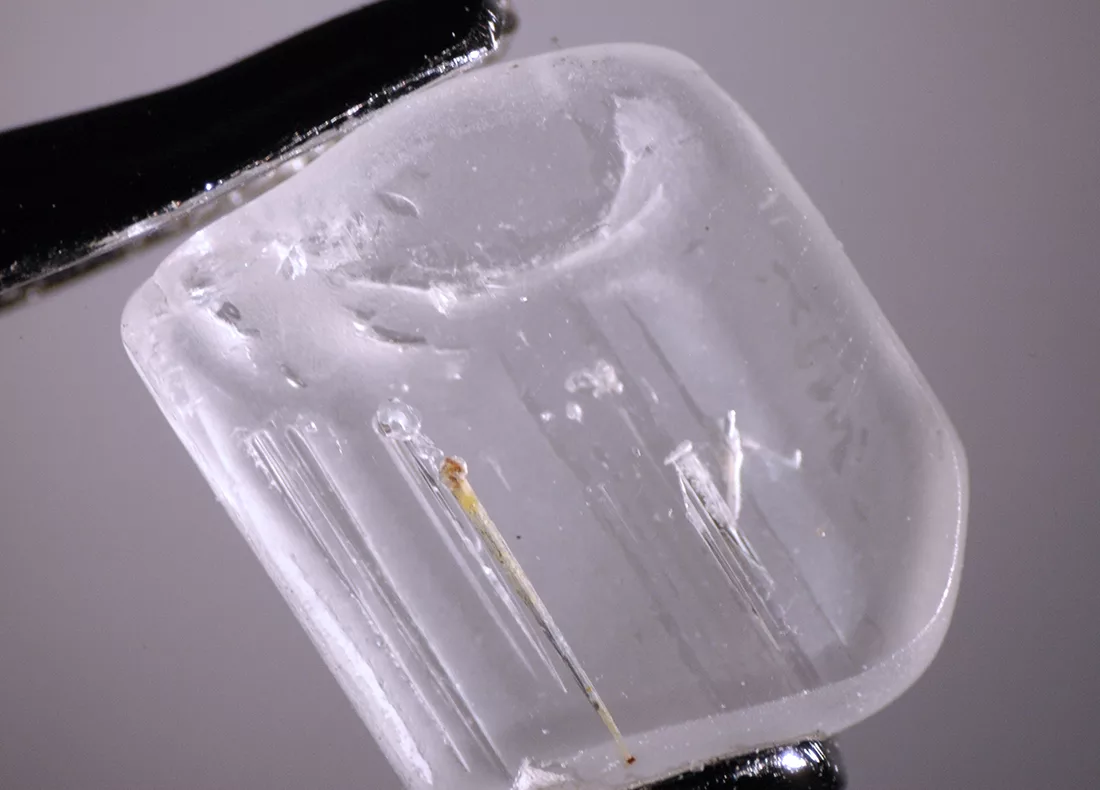
Colourless Chrysoberyl from Mogok
first published in Facette 22 (February 2016) Chrysoberyl is found in various colours, mostly yellow to green and brown due to iron, light green to bluish green (vanadium) or as the colour-changing variety alexandrite (due to chromium). In rare cases, chrysoberyl is also found in colourless and chemically rath