




The Hidden Gem
Gems carry more than beauty. They carry history, science, culture, and the lives of the people who find, study, cut, trade and treasure them.
The Hidden Gem is a podcast from the Swiss Gemmological Institute (SSEF). In each episode, Laurent Cartier and Michael Krzemnicki sit down with some of the world’s leading figures in gemstones and jewellery for in-depth conversations — following the journey from the source to the finished piece, and the human stories at every step.


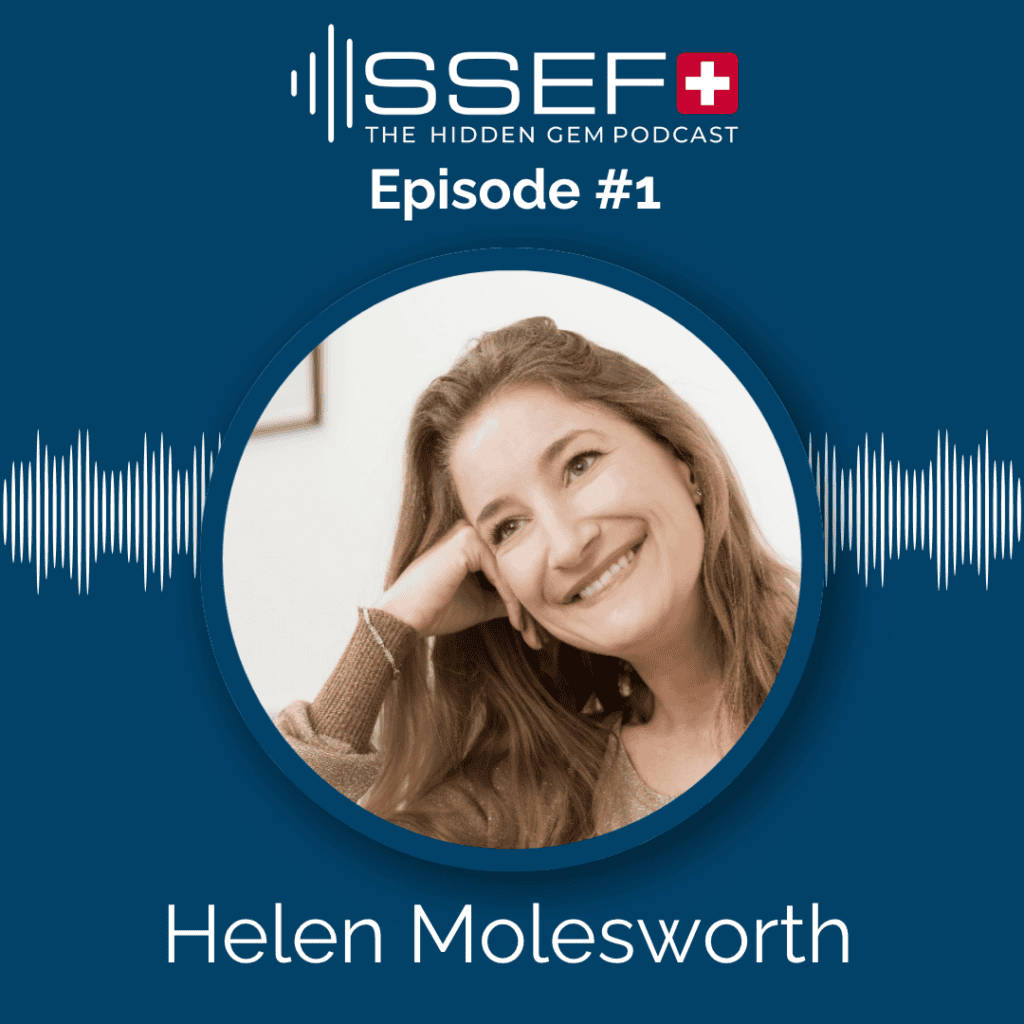
Helen Molesworth: On why gems and jewels touch every level of humanity
Description
- Jewellery historian and gemmologist Helen Molesworth joins Laurent Cartier at the V&A in London to explore why gems have captivated humanity for thousands of years. From a childhood geode that broke her leg to curating the museum’s blockbuster Cartier exhibition, Helen makes the case that no other subject sits at the crossroads of science, history, art and emotion quite like this one.
Show notes
- In this opening episode of Hidden Gems, Laurent Cartier meets Helen Molesworth at the Victoria and Albert Museum in London, where she serves as Senior Curator of Jewellery and was lead curator of the 2025 Cartier exhibition. Helen traces her lifelong fascination with gemstones back to a childhood encounter with an amethyst geode — and a broken leg — and makes the case that gems and jewels touch more levels of humanity than any other subject: chemistry, physics, geology, finance, art history, design, and the human stories behind every stone. The conversation moves from the evolution of “preciousness” across cultures and centuries, to the realities of small-scale mining in Sri Lanka, to synthetic diamonds, cultured pearls, and the propaganda power of pearls in Elizabethan portraits. Helen also shares the story behind her favourite jewel in the Cartier exhibition — the Williamson Diamond Brooch — and reflects on why gemstones continue to ground us in an increasingly digital world.
More information
About the guest
Helen Molesworth is Senior Curator of Jewellery at the Victoria and Albert Museum in London, and lead curator of the V&A’s 2025 Cartier exhibition. A jewellery historian and gemmologist with over 25 years of experience, she has previously held positions at Sotheby’s and Christie’s.
Website
https://www.helenmolesworth.com
Books by Helen Molesworth
Precious: The History and Mystery of Gems Across Time (Penguin, 2024)
Cartier Exhibition Book (V&A Publishing, 2025)
Credits
Hosted by Laurent Cartier (SSEF). Produced by Martin Herzog. Intro music composed by MMYYLO. A podcast by SSEF — the Swiss Gemmological Institute.
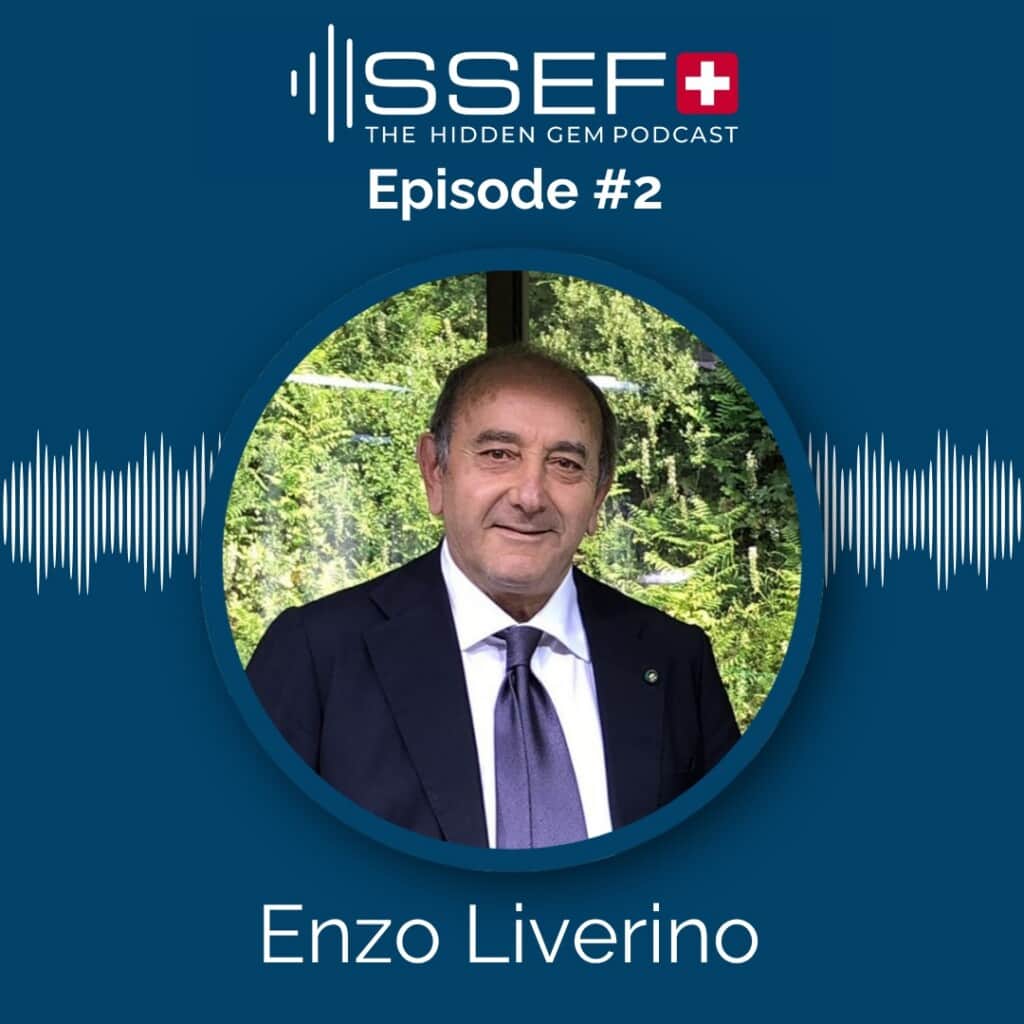
Enzo Liverino: On precious coral, craftsmanship, and the heritage we pass on
Description
- Fourth-generation coral specialist Enzo Liverino joins Laurent Cartier to talk about precious coral — a material humans have prized for thousands of years, from Mediterranean fishermen to Tibet and the kings of Benin. From learning to read a coral branch as a boy in his father’s factory in Torre del Greco, to buying rough material in Japan and Taiwan in his twenties, Enzo shares a lifetime of knowledge — and makes the case that what really matters is the culture and heritage we pass on.
Show notes
- In this episode of the Hidden Gem, Laurent Cartier meets Enzo Liverino, fourth-generation coral specialist from Torre del Greco — the historic heart of the precious coral trade in Italy. The conversation moves through Enzo’s childhood in his father’s factory, his years buying rough coral in China, Taiwan and Japan, and the deep cultural reach of coral across the world — from Tibet and Cambodia to Morocco, Nigeria, and Native American traditions. Enzo and Laurent discuss the prized varieties of precious coral — angel skin, ox blood, boké, konojoi — and the remarkable story of the Sciacca sub-fossil coral deposits, discovered off the coast of Sicily in 1875 and commercially exhausted by the early 20th century. Enzo has just authored a new book on Sciacca coral, drawing on decades of personal research and historical documents from the archives of the Costa company. He reflects on the realities of coral fishing today, why he is pushing to change European regulations to allow ROV (robot) harvesting as is already done in Japan, and why he believes the future of the trade depends as much on knowledge transfer as on raw material. He also shares the story of acquiring the largest known angel skin necklace in the world, his collaboration with contemporary artist Jan Fabre, and the coral training programme he runs in Naples for young people with Down syndrome and autism, who graduate as Coral Ambassadors.
More information
About the guest
Enzo Liverino is a fourth-generation coral specialist based in Torre del Greco, Italy. He runs the family business founded in the 19th century and oversees the Liverino Coral Museum, which houses one of the most comprehensive collections of coral art in the world, spanning Sciacca craftsmanship, Neapolitan jewellery, Chinese and Japanese carvings, and contemporary works. He is the author of a new book on sciacca coral, published in 2025.
Books by Enzo Liverino
Sciacca coral by Enzo Liverino
Instagram
https://www.instagram.com/enzoliverino/
Credits
Hosted by Laurent Cartier (SSEF). Produced by Martin Herzog. Intro music composed by MMYYLO. A podcast by SSEF — the Swiss Gemmological Institute.

Joanna Hardy: On gems and being custodians of what the earth provides
Description
- Jewellery historian and Antiques Roadshow specialist Joanna Hardy joins Laurent Cartier at Goldsmiths’ Hall in London to talk about a career built on curiosity — from a childhood spent surrounded by her godmother’s mineral cabinets, to sorting rough diamonds at De Beers in the 1980s, to writing definitive books on ruby, sapphire and emerald. Joanna reflects on what it took to find her way in a male-dominated trade, why trust and reputation still sit at the heart of the gemstone world, and why — even in an age of AI and synthetic stones — the craft, the human stories, and the unexplained energy of gems still draw us in.
Show notes
- In this episode of Hidden Gems, Laurent Cartier meets Joanna Hardy at Goldsmiths’ Hall in London during Goldsmiths’ Fair, where Joanna serves as Third Warden of the Goldsmiths’ Company. Joanna traces her path into the trade from a childhood encounter with her godmother Margaret Biggs — the first woman to pass the FGA with distinction in 1923 — and her sister Mary’s abstract paintings of minerals, to learning the bench at fourteen at Bedales school, to a Saturday job in Hatton Garden rummaging through Mr Holt’s stones for fragments she could afford on a teenager’s budget. The conversation moves through her years sorting rough at De Beers’ CSO in Charterhouse Street in the 1980s, her move to Antwerp as an assistant polished diamond dealer, and the male-dominated world of Ramat Gan — where she learned, the hard way, that diligence and knowledge were the only way through. Joanna recounts the Garrard and Mappin & Webb order that changed her career, her later move into the auction world at Phillips, and the shift from dealer relationships to the emotional reality of valuing for the public on the BBC’s Antiques Roadshow, where she’s now been a regular for twenty years. She and Laurent discuss the lasting power of trust and reputation in a trade that has gone digital, the role of hallmarking and education in protecting consumers, the renaissance of craft in an age of AI and CAD, and the parallels between today’s debates around synthetic diamonds and the arrival of cultured pearls and synthetic rubies a century ago. Joanna also shares two unforgettable encounters — with a stranger who appeared at her door carrying a ruby crystal just as her book on rubies went to press, and a sapphire crystal that shattered a wine glass at dinner — and reflects on why, after decades in the trade, gemstones still hold a mystery she’s happy not to fully explain.
More information
About the guest
Joanna Hardy is one of Britain’s leading independent jewellery specialists and a long-standing expert on the BBC’s Antiques Roadshow. She trained as a goldsmith at Sir John Cass College, began her career as a rough diamond valuer and sorter for De Beers, and went on to work as a polished diamond dealer in Antwerp before joining Phillips and later Sotheby’s as a senior specialist. She now runs an independent consultancy, lectures internationally, and is Third Warden of the Goldsmiths’ Company. She is the author of Emerald, Ruby and Sapphire (Thames & Hudson), the result of more than a decade of research and travel to the source.
Website & Instagram
https://www.joannahardy.com/
https://www.instagram.com/joannahardyltd/
Books by Joanna Hardy
Emerald (Thames & Hudson)
Ruby (Thames & Hudson)
Sapphire (Thames & Hudson)
Credits
Hosted by Laurent Cartier (SSEF). Produced by Martin Herzog. Intro music composed by MMYYLO. A podcast by SSEF — the Swiss Gemmological Institute.
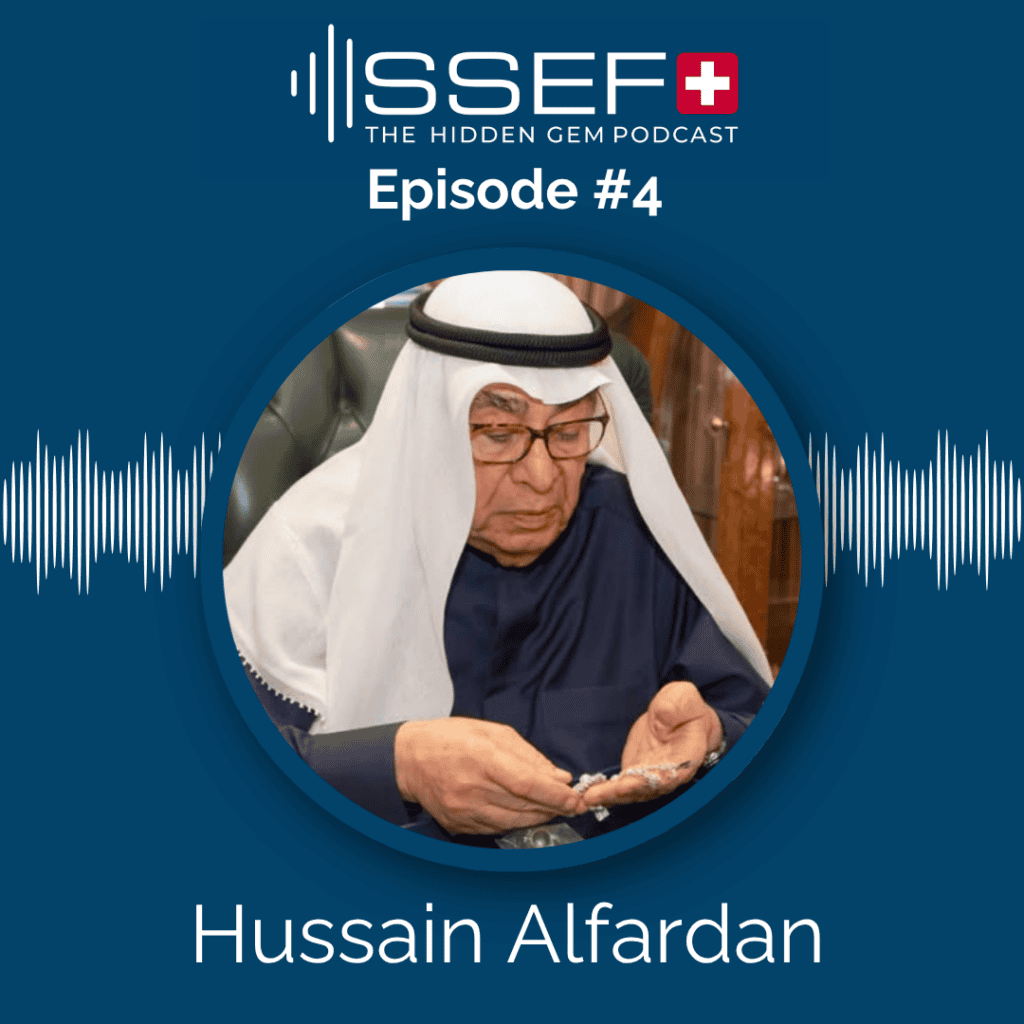
Hussain Alfardan: On a lifetime with natural pearls
Description
- Hussain Alfardan, one of the world’s most influential collectors of natural pearls, joins Michael Krzemnicki and Laurent Cartier at GemGenève to share a lifetime spent with pearls. Born into a Qatari family whose business traced back through generations of pearl trading, Mr. Alfardan saw the Gulf’s pearl economy collapse with the arrival of cultured pearls and the discovery of oil — and yet kept collecting through the lows. He reflects on rarity, patience, the personal bond he has with each pearl, and why for him a natural pearl will always be something made by nature.
Show notes
- In this episode of Hidden Gems, Michael Krzemnicki and Laurent Cartier meet Mr. Alfardan at GemGenève, where they speak with him about a lifetime’s relationship with natural pearls. Mr. Alfardan grew up surrounded by pearls in Qatar, where his father — known as “the surgeon of the pearl” for his skill at peeling — was one of the most respected experts in the Gulf. The conversation traces the rise and fall of the Gulf pearling economy, from the wealthy years that supplied the world with natural pearls, to the collapse triggered by Mikimoto’s cultured pearls, the two World Wars, and Indian independence in 1947, when one of the trade’s most important markets effectively closed. Oil arrived just in time to transform the region — and Mr. Alfardan’s family business diversified into trading, real estate, cars and jewellery — but he kept collecting pearls as a private passion that, over decades, grew into one of the most important natural pearl collections in the world. Mr. Alfardan and his hosts discuss what makes a beautiful natural pearl — colour, lustre, shape, weight — and why no two are alike. He reflects on the long quiet decades when natural pearls were forgotten and prices collapsed, when he kept buying at auctions in London, Geneva and New York “because nobody else was buying,” and on the renewed global appetite of recent years that has seen the great Maisons — Cartier, Harry Winston, Tiffany, Boucheron — return to natural pearls. He shares the story behind acquiring a historic pearl known as “Hope,” and a Bulgari necklace once made for Empress Soraya of Iran that he now regrets selling. Mr. Alfardan also reflects on the lost craft of pearl peeling — his father’s specialty — now almost extinct, the role of science and gemmological testing in protecting clients, and the intuition built over a lifetime that lets him spot a natural pearl across a room. The conversation closes with Mr. Alfardan reflecting on the divers, sailors and craftsmen who built the Gulf pearling economy, the heritage he has worked to revive in Qatar, and the personal bond he keeps with his pearls — pieces he sometimes simply sits with, talks to, and admires for the beauty of what nature has made.
More information
About the guest
Hussain Alfardan is a Qatari businessman, collector, and chairman of the Alfardan Group. Born into a family whose pearling roots go back generations, Mr. Alfardan has spent more than seventy years collecting natural pearls and is widely credited with helping to revive global appreciation for them. His private collection in Doha is regarded as one of the most important natural pearl collections in the world, and a reference for researchers and the major jewellery houses alike.
Books
Natural Pearls, a Timeless Legacy: The Alfardan Collection
Credits
Hosted by Laurent Cartier (SSEF). Produced by Martin Herzog. Intro music composed by MMYYLO. A podcast by SSEF — the Swiss Gemmological Institute.
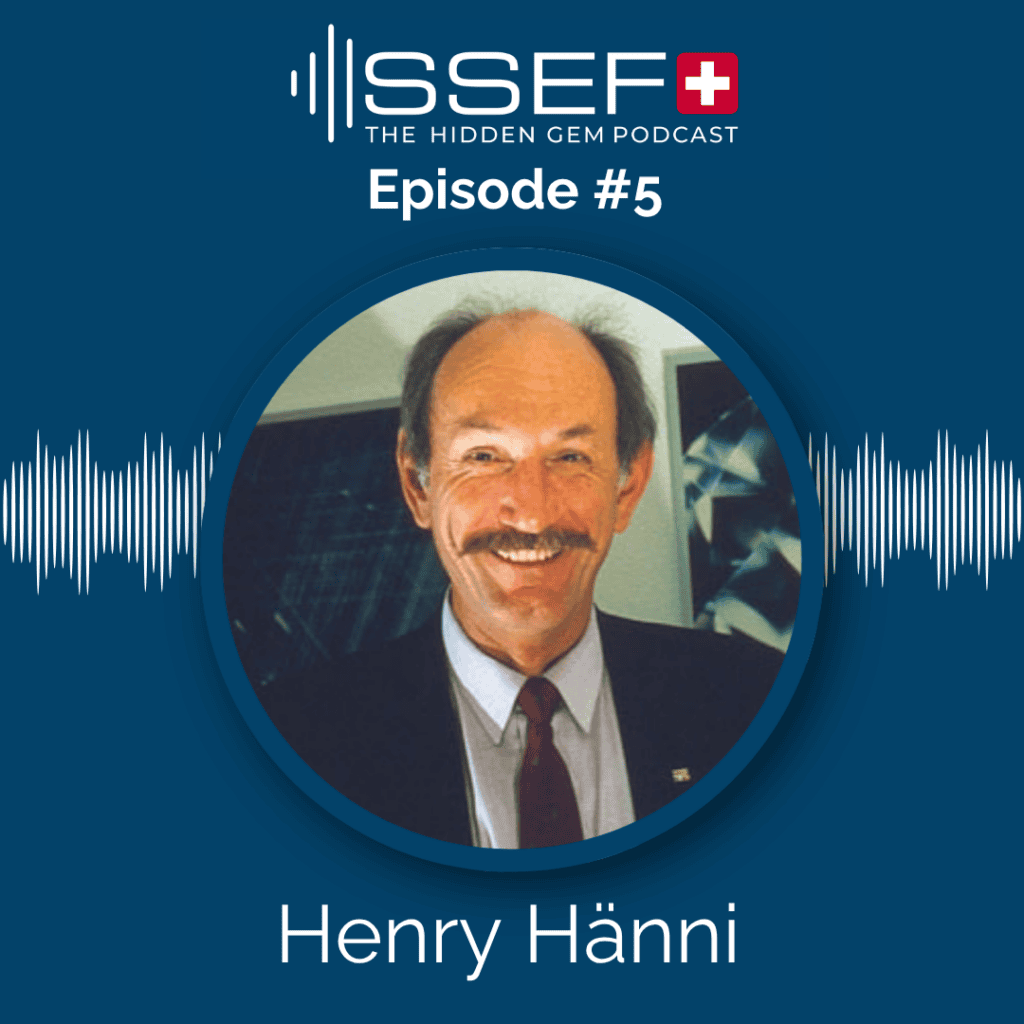
Prof. Dr. Henry A. Hänni: On a life in gemmology, curiosity, and the courage to question
Description
- Recorded in the summer of 2024, this episode is a conversation with Professor Dr. Henry Hänni, who served as Director of SSEF from 1990 to 2009 and whose work helped shape modern gemmology. Henry passed away on 8 January 2025, and it is a privilege to share his voice here. Laurent Cartier — a former student of Henry’s — speaks with him about an unconventional path into science, the discoveries that pushed gemmology toward scientific rigour, the death threats and difficult truths that came with the work, and a lifelong fascination with the colour and symmetry of stones. This conversation was originally recorded in Swiss German. The English version you hear is a voice-over, with Laurent Cartier reading his own words and Martin Herzog voicing Henry.
Show notes
- This episode was originally recorded in Swiss German in the summer of 2024. The English version you hear is a voice-over, with Laurent Cartier reading his own words and Martin Herzog voicing Henry, so the conversation could reach a wider audience. In this episode of Hidden Gems, Laurent Cartier sits down with Professor Dr. Henry Hänni in the summer of 2024 for a wide-ranging conversation about a life spent with gemstones. Henry passed away on 8 January 2025, and this episode is shared in his memory — and as a tribute to a teacher whose curiosity, scientific rigour, and humour shaped a generation of gemmologists, Laurent among them. Henry traces his unconventional path into science: a fascination with colour and symmetry from childhood that drew him equally to plants and stones, an early job as a workshop assistant at the University of Basel’s mineralogical institute, and a self-directed return to high school via correspondence and evening classes that allowed him to graduate at 24 and begin his university studies. He recalls discovering that fieldwork was not for him, finding his place in the laboratory, and joining SSEF — then in Zurich — under its first director, George Bosshart. The conversation moves through the work that helped define modern gemmology: the development of instrument-based analysis using X-ray microprobe, X-ray fluorescence, FTIR and Raman spectroscopy at a time when most gemmologists relied on the loupe and the microscope alone; the seminal 1990 Journal of Gemmology paper on Kashmir sapphires that pushed the trade toward evidence-based origin determination; and the work on Colombian emeralds that revealed artificial resin treatments being passed off as oil — research that produced a meeting in Bogotá Henry ultimately could not attend, having received death threats. Henry reflects on the work he is most proud of — his explanation of how cultured pearls form, published in German, English and Chinese — his investigations into pearl formation that involved cutting natural pearls in half to understand what was inside, his correction of the misnamed “chloromelanite” to maw-sit-sit with Jürg Meier, and his discovery of heat treatment in demantoid garnets, which he was the first to describe. He and Laurent discuss the growing gap between specialists and generalists in gemmology, the importance of teaching, and Henry’s lifelong impatience with what he politely calls “talking nonsense” — the small false claims that, left unchecked, fly everywhere. The conversation closes with Laurent telling Henry that SSEF has established the Henry A. Hänni Scholarship, which supports students from gemstone-producing countries — a recognition Henry received with visible emotion.
More information
About the guest
Professor Dr. Henry Hänni (1945–2025) was Director of SSEF, the Swiss Gemmological Institute, from 1990 to 2009, and Professor of Gemmology at the University of Basel. He trained as a geologist and mineralogist at the University of Basel, where he completed his PhD before joining SSEF as a researcher under George Bosshart. Over a career spanning more than four decades, Henry authored landmark studies on Kashmir sapphires, emerald treatments, cultured pearl formation, new analytical methods, origin determination and many other subjects, and helped establish the scientific foundations of modern gemmological practice. He was a mentor to generations of gemmologists worldwide.
Research publications
Explore here
The Henry A. Hänni Scholarship
Established by SSEF in Henry’s honour, the scholarship supports students from gemstone-producing countries to pursue gemmological education at SSEF, covering tuition, travel, and accommodation. More details here
Credits
Hosted by Laurent Cartier (SSEF). Produced by Martin Herzog, who also voices Henry Hänni in this episode. Intro music composed by MMYYLO. A podcast by SSEF — the Swiss Gemmological Institute.
Prof. Dr. Henry A. Hänni: Über ein Leben in der Gemmologie, Neugier und den Mut zu hinterfragen
Description
- Diese Folge ist ein Gespräch mit Professor Dr. Henry Hänni, der von 1990 bis 2009 Direktor des SSEF war und dessen Arbeit die moderne Gemmologie massgeblich geprägt hat. Aufgezeichnet wurde es im Sommer 2024. Henry verstarb am 8. Januar 2025, und es ist ein Privileg, seine Stimme hier teilen zu dürfen. Laurent Cartier — ein ehemaliger Student Henrys — spricht mit ihm über seinen unkonventionellen Weg, über Entdeckungen, und wie die Gemmologie zu einer modernen wissenschaftlichen Disziplin geworden ist, über die Morddrohungen und unbequemen Wahrheiten, die mit dieser Arbeit einhergingen, und über eine lebenslange Faszination für die Farbe und Symmetrie von Steinen.
Show notes
- In dieser Folge von Hidden Gems trifft Laurent Cartier im Sommer 2024 Professor Dr. Henry Hänni zu einem ausführlichen Gespräch über ein Leben mit Edelsteinen. Henry verstarb am 8. Januar 2025, und diese Folge erscheint zu seinem Andenken — und als Hommage an einen Mentor, dessen Neugier, wissenschaftliche Genauigkeit und Humor eine ganze Generation von Gemmologen geprägt haben, Laurent eingeschlossen. Henry erzählt von seinem unkonventionellen Weg: einer kindlichen Faszination für Farbe und Symmetrie, die ihn gleichermassen zu Pflanzen und Steinen führte, einer frühen Anstellung als Werkstattassistent am Mineralogischen Institut der Universität Basel und einem eigenständigen Wiedereinstieg in die Schule über Fern- und Abendkurse, der ihm mit 24 Jahren die Matura und damit den Zugang zum Studium ermöglichte. Er erinnert sich daran, wie er erkannte, dass Feldforschung nicht sein Ding war, wie er seinen Platz im Labor fand und wie er — damals noch in Zürich — unter dem ersten Direktor George Bosshart zum SSEF kam. Das Gespräch führt durch jene Arbeiten, die die moderne Gemmologie mitgeprägt haben: die Entwicklung instrumentengestützter Analytik mit Röntgenmikrosonde, Röntgenfluoreszenz, FTIR und Raman-Spektroskopie zu einer Zeit, in der die meisten Gemmologen ausschliesslich mit Lupe und Mikroskop arbeiteten; die wegweisende Publikation von 1990 im Journal of Gemmology zu Kashmir-Saphiren, die den Handel zu einer evidenzbasierten Herkunftsbestimmung führte; und seine Arbeiten zu kolumbianischen Smaragden, die Behandlungen mit Kunstharz aufdeckten, die als Öl deklariert wurden — Forschung, die zu einer Konferenz in Bogotá führte, an der Henry letztlich nicht teilnehmen konnte, weil er Morddrohungen erhalten hatte. Henry reflektiert über die Arbeiten, auf die er besonders stolz ist — seine Erklärung der Bildung von Zuchtperlen, publiziert auf Deutsch, Englisch und Chinesisch — über seine Untersuchungen zur Perlenbildung, bei denen er natürliche Perlen halbierte, um zu verstehen, was sich im Inneren befindet, über die Korrektur des falsch benannten “Chloromelanit” zu Maw-sit-sit gemeinsam mit Jürg Meier. Er und Laurent sprechen über die wachsende Kluft zwischen Spezialisten und Generalisten in der Gemmologie, über die Bedeutung der Lehre und über Henrys lebenslange Ungeduld mit dem, was er höflich als “Unsinn reden” bezeichnet — die kleinen falschen Behauptungen, die sich, lässt man sie unkorrigiert, überallhin verbreiten. Das Gespräch endet damit, dass Laurent Henry mitteilt, dass das SSEF das Henry A. Hänni-Stipendium ins Leben gerufen hat, das Studierende aus Edelstein-Produktionsländern unterstützt — eine Anerkennung, die Henry sichtlich bewegt entgegennimmt.
More information
Über den Gast
Professor Dr. Henry Hänni (1945–2025) war von 1990 bis 2009 Direktor des SSEF, des Schweizerischen Gemmologischen Instituts, und Professor für Gemmologie an der Universität Basel. Er studierte Geologie und Mineralogie an der Universität Basel, wo er promovierte, bevor er als Forscher unter George Bosshart zum SSEF kam. Im Verlauf einer über vier Jahrzehnte umspannenden Karriere verfasste Henry wegweisende Studien zu Kashmir-Saphiren, Smaragd-Behandlungen, der Bildung von Zuchtperlen, neuen Analyseverfahren, Herkunftsbestimmung und vielen weiteren Themen und legte damit wesentliche wissenschaftliche Grundlagen der modernen gemmologischen Praxis. Er war Mentor für Generationen von Gemmologen weltweit.
Forschungspublikationen
Hier abrufbar
Das Henry A. Hänni-Stipendium
Vom SSEF zu Henrys Ehren ins Leben gerufen, unterstützt das Stipendium Studierende aus Edelstein-Produktionsländern bei einer gemmologischen Ausbildung am SSEF und übernimmt Studiengebühren, Reise- und Unterkunftskosten. Mehr Informationen hier
Credits
Moderation: Laurent Cartier (SSEF). Produktion: Martin Herzog. Intro-Musik komponiert von MMYYLO. Ein Podcast des SSEF — des Schweizerischen Gemmologischen Instituts.
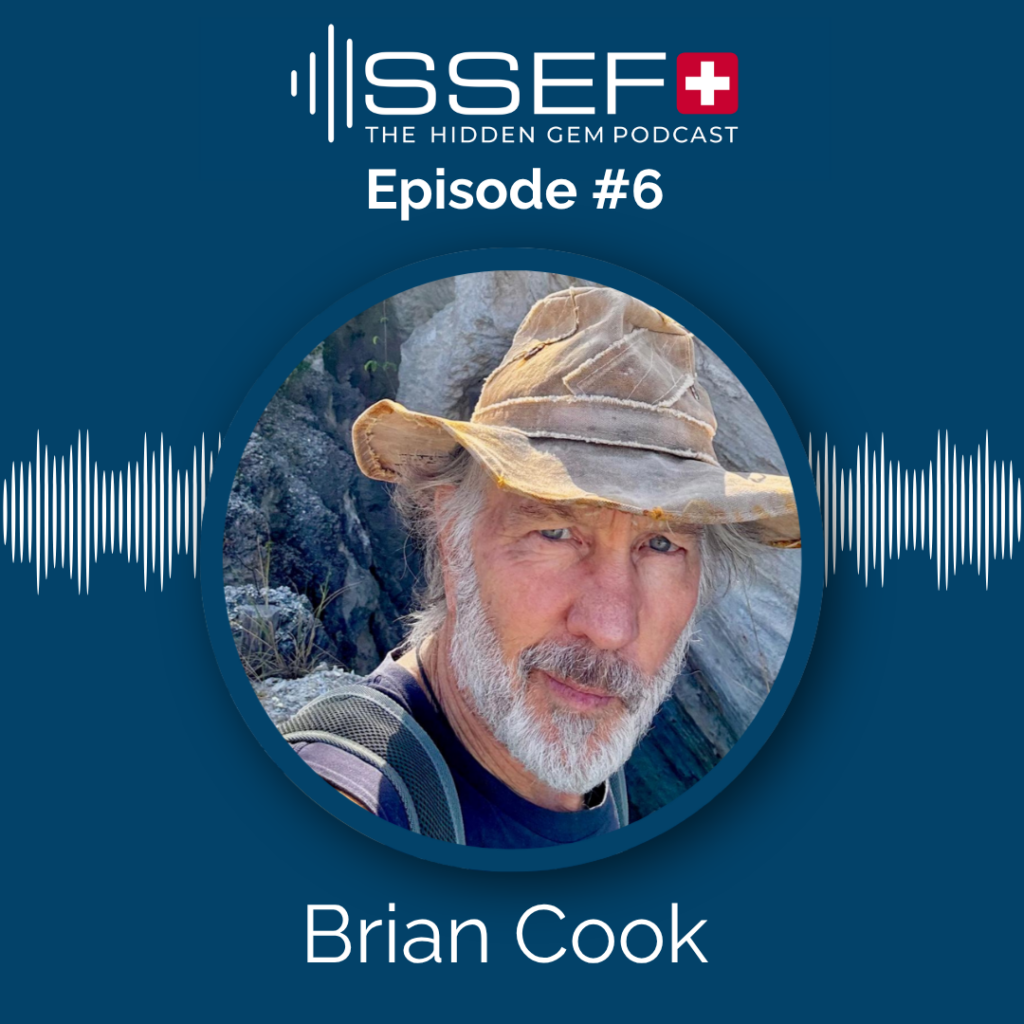
Brian Cook: On Paraíba tourmaline and a colour the world had never seen
Description
- Geologist and gem hunter Brian Cook joins Laurent Cartier to talk about a life spent chasing crystals in Brazil — and about being one of the first people outside the country to see Paraíba tourmaline. From a chrysocolla pebble given to a high-school girlfriend, to emerald pits in the Bahian outback, to a dinner plate of electric blue stones in a remote town in Rio Grande do Norte, Brian tells the story of a discovery that changed the gem world — and explains why, after four decades, the artisanal mining communities behind the stones matter to him as much as the stones themselves.
Show notes
- In this episode of the Hidden Gem, Laurent Cartier meets Brian Cook, a geologist and gem hunter who has spent more than four decades working with Brazilian gems and minerals. The conversation moves through Brian’s geology studies in California, funded by gems his Brazilian mother-in-law carried up from Salvador, his first buying trip to the Socotó emerald diggings in the Bahian outback, and the remote valley where he became the first foreigner the village had ever seen — and where he still sources rutilated quartz forty years later. Brian and Laurent turn to Paraíba tourmaline. In 1988, while running a grassroots gold exploration company in Northeast Brazil, Brian asked a contact in Parelhas for aquamarine and was shown a plate of vivid blue and green stones instead. He describes the colour filling his mind for months afterwards, tracking down Heitor — the miner who had dug at Batalha for seven years before his crew finally hit cuprian tourmaline while he was away, only to return and find armed men on his claim — and carrying the first crystals to GIA in Santa Monica, where a short note in Gems & Gemology became the first published mention of the find. By Tucson in 1990 the stone had a name and a reputation: prices that opened around $250 per carat reached $2,500 within six days, and have never fallen since. Brian also discusses the two later Brazilian finds and why only one still produces today, why some cuprian tourmalines are heated and others are not, and how blue apatite briefly fooled the market. He reflects on the decades-long dispute over the original mine, on mapping Batalha in 1991 and presenting the discovery at the GIA symposium that year alongside Campbell Bridges and tsavorite, and on his work with artisanal miners in Bahia — how he used an obscure provision in Brazilian mining law to formalise claims without paying a bribe, then showed other local landowners how to do the same, and why he believes small-scale mining communities can supply the credible, provable stories the coloured gemstone industry keeps asking for.
More information
About the guest
Brian Cook is a geologist, gem and mineral dealer, and lapidary based in California, with more than 40 years of experience in Brazil. He was among the first people outside Brazil to encounter Paraíba tourmaline, produced the first map of the Batalha mine in 1991, and presented on the discovery at the GIA International Gemological Symposium the same year. Through Nature’s Geometry, he works with artisanal mining communities in Bahia, where he holds claims for rutilated quartz, and advocates for the role of small-scale miners in responsible sourcing.
Links
https://www.instagram.com/goldenrutilatedquartz/
Credits
Hosted by Laurent Cartier (SSEF). Produced by Martin Herzog. Intro music composed by MMYYLO. A podcast by SSEF — the Swiss Gemmological Institute.