




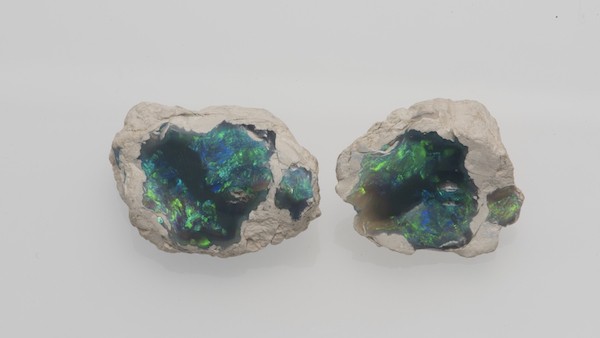
The allure of back opals
Opal comes from the Sanskrit upala and the Latin opalus, meaning “precious stone”. The Roman naturalist Pliny the Elder (A.D. 23/24 – 79) wrote that: “In the opal you will see the refulgent fire of the carbuncle (red gems), the glorious purple of amethyst, and the sea green of the emerald, and all these
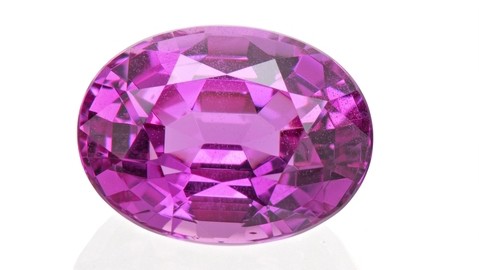
New and additional criteria to detect low-t heated corundum
Heat treatment of ruby, sapphire and other colour varieties of corundum is one of the main issues for the gem trade. As such, detecting such treatment is a major task of gemmological laboratories issuing gemstone reports. Unfortunately, and especially lately, the detection of such heating is not always straight
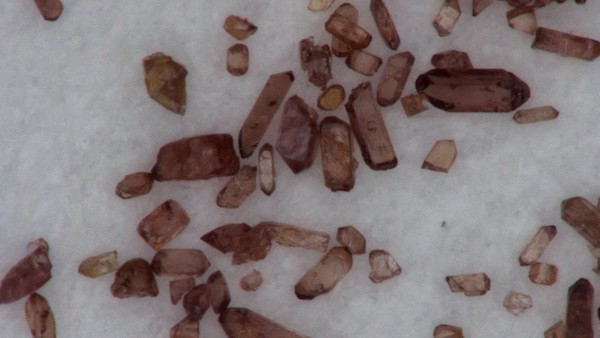
GemTOF quality control: participation in 2nd age dating blind round robin dating test
Age dating of minerals and their associated rock formations is important in geoscience research in order to be able to reconstruct and understand geological processes and Earth’s history. To be able to date a mineral, it is necessary that this mineral incorporates an element/isotope that decays radioactively
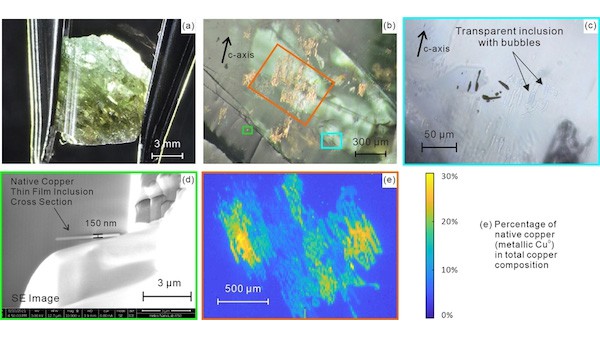
Native copper inclusions in copper-bearing tourmaline: a new formation scenario?
Gold-coloured platelet inclusions have been reported in copper- bearing tourmaline from Paraíba State in Brazil since the discovery of this highly sought-after gemstone (Fritsch et al., 1990) in the late 1980s. Until now, this extraordinary type of inclusion in tourmaline was mentioned in the literature only

Ti-diffusion treated sapphire cabochons
Titanium diffusion treatment is known since decades: it can lead to a surface-related blue colour in corundum. Basically, this treatment is a heating process requiring high temperatures in combination with titanium (oxide) as an additive. During the treatment, titanium atoms penetrate into a superficial layer o
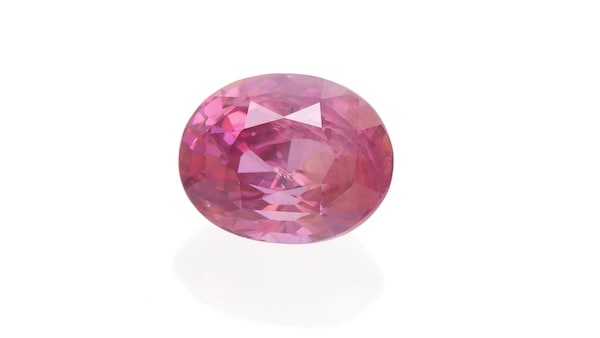
Pink sapphire with orange iron hydroxides in fissures
Padparadscha is one of the most attractive corundum varieties in the trade and is sought after for its subtle pinkish orange to orangey pink colour. Padparadscha, originally known from Sri Lanka only, is found today also in other deposits such as for example in Madagascar and Tanzania, both part of East Africa
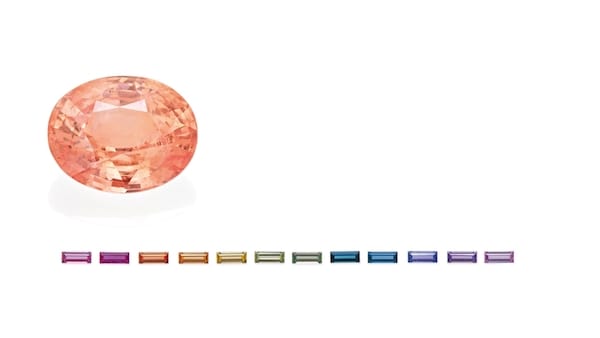
Testing of calibrated coloured stones: a complex job for gemmologists
The Swiss Gemmological Institute SSEF is regularly testing batches of tiny calibrated coloured stones for the Swiss watch industry similar to our testing service for melée diamonds. Testing such small coloured gemstones is challenging, starting with the handling of such small stones to analytical restrictions
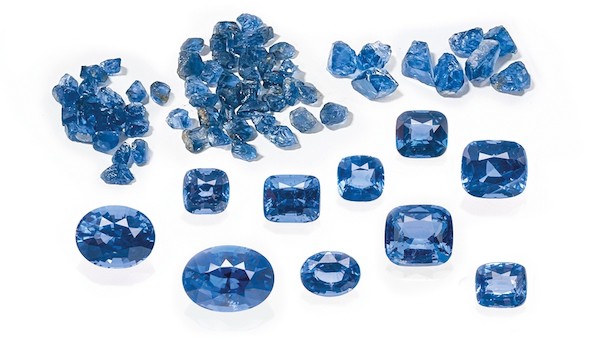
New cobalt-bearing spinel from Lukande, Tanzania
Gem-quality spinel (MgAl2O4) from Tanzania is well known in the trade for many decades. Most of these spinels are purple or pink to saturated red. Especially famous are pinkish red spinels from Mahenge, which in fact are found at the locality Epanko (or Ipanko), about 7 km south of the small township of Mahenge
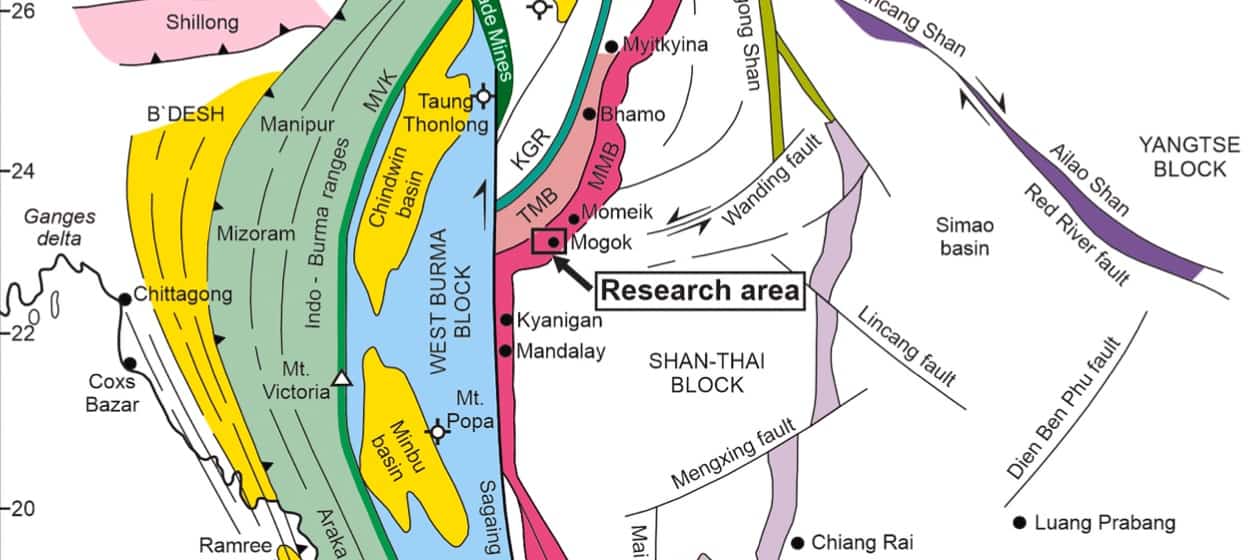
Petrology, geothermobarometry and geochemistry of granulite facies wall rocks and hosting gneiss of gemstone deposits from the Mogok area (Myanmar)
Petrology, geothermobarometry and geochemistry of granulite facies wall rocks and hosting gneiss of gemstone deposits from the Mogok area (Myanmar). Journal of Asian Earth Sciences, X 9, 100132.

SSEF validates the ASDI-500 device and provides unique worldwide service for melee diamonds down to 0.5mm
ASDI-500, is the world’s first automatic device to verify the nature of diamonds – natural diamonds VS laboratory-grown diamonds VS diamond simulants – down to the tiny size of half a millimeter (0.5mm or 500 micrometers, hence its name ASDI 500).