




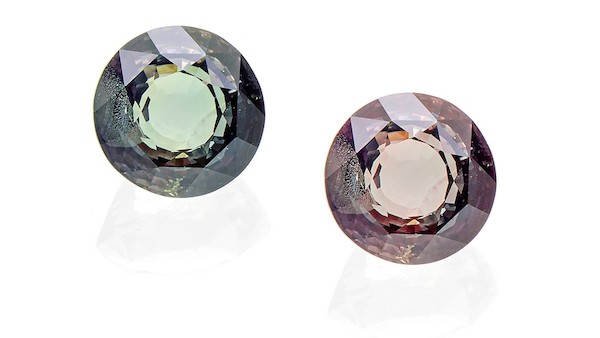
An interesting chrysoberyl-alexandrite combination
The mineral chrysoberyl BeAl2O4 is an attractive gemstone that shows a wide variation of colours mostly ranging from yellow to green and brownish green to dark brown. These colours are mainly due to the presence of iron and sometimes vanadium as chromophore elements inside the crystal lattice structure.
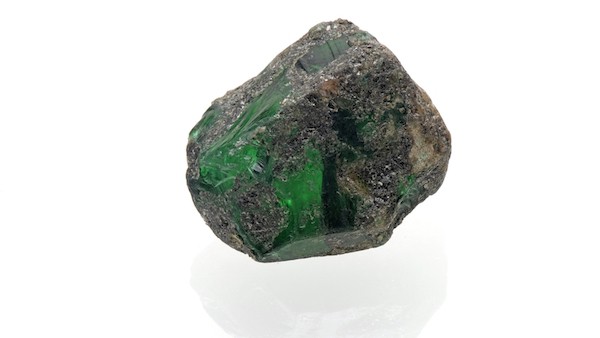
Dyed quartz imitating emerald
From time to time, we receive some oddities for testing, such as the rough “emerald”, reportedly originating from Africa and submitted by a client for testing. Already a quick visual examination made it clear that this was not an emerald. The surface was dominated by conchoidal fractures and covered partly
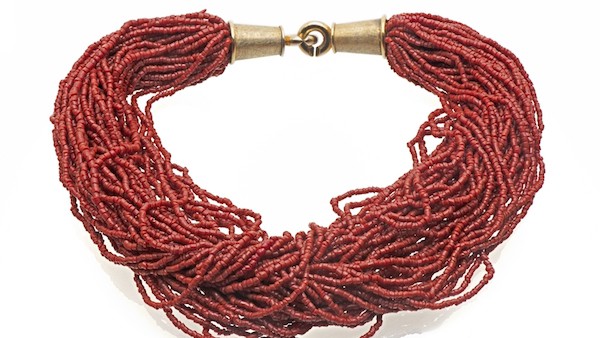
Happy hour with soda and lime: glass imitating coral
Recently, a necklace was submitted to SSEF for coral testing. Already a first microscopic inspection revealed that this item in fact consisted of numerous tiny glass beads, visually imitating coral very well (e.g. corallium rubrum). The most obvious microscopic feature was the presence of air bubbles in these g
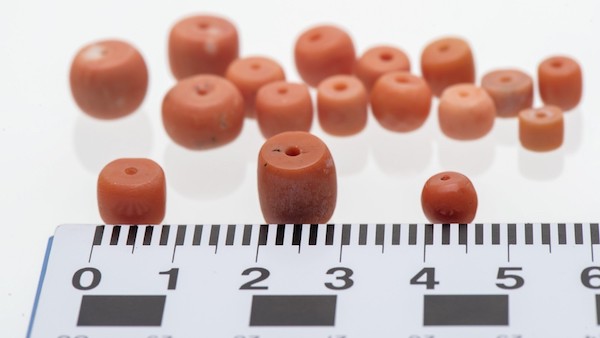
Novel Coral-ID method used on samples seized by swiss customs
In 2022, an international research group led by scientists from the Swiss Gemmological Institute SSEF and the University of Zurich’s Institute of Forensic Medicine (IRM) reported a breakthrough in precious coral jewellery traceability, through the use of a novel forensically validated genetic technique called
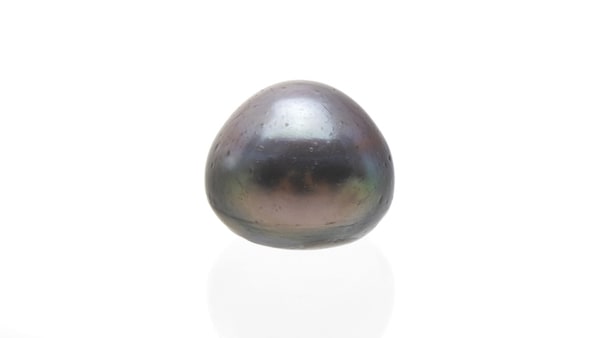
Saltwater pearl with barium
Recently, the SSEF received a button-shaped pearl of 7.5 ct for testing. Based on X-ray radiography and a UV-Vis-NIR reflectance spectrum, the pearl was easily identified as a saltwater natural pearl from the species Pinctada margaritifera.
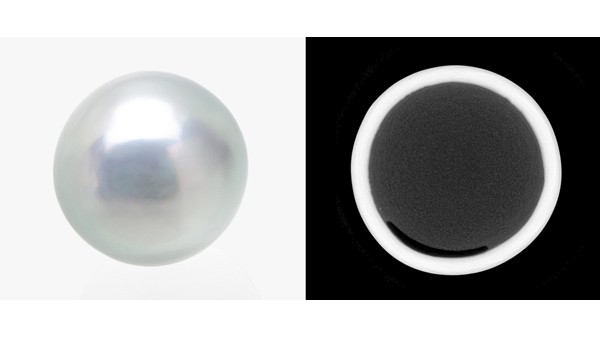
Cultured pearl with unconventional bead material
Recently, we received a round pearl for testing which exhibited an excellent surface quality and a remarkable size of 24 mm in diameter. Interestingly, its weight of 60 ct was rather low for such a pearl (resulting in a calculated specific gravity of approx. 1.61 instead of 2.715 considered standard for a pearl
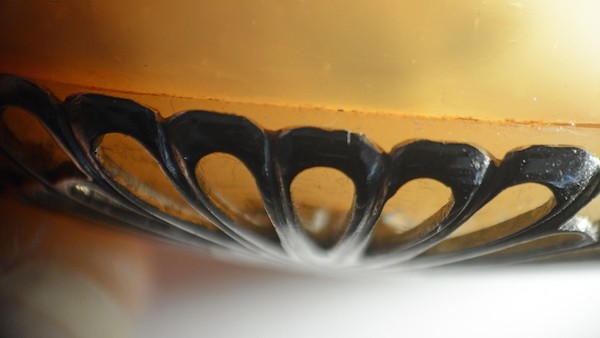
Assembled blisters and shells used to imitate pearls
Since historic times, natural pearls have been treasured and considered symbols of wealth and beauty. When harvesting (natural) pearls, one may find not only a pearl inside a shell, but also blister pearls and quite often blisters. A pearl has grown completely wrapped in a pearl sac in the mollusc, whereas a bl
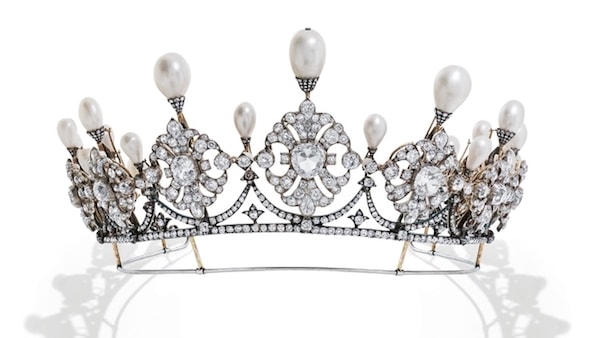
Pearls & diamonds: a royal selection
The SSEF is known worldwide as a leading authority in gem testing, and as such we have the great pleasure to scientifically analyse some of the most prestigious and important jewellery before it is offered up for auction or in private sales. Apart from testing the gem materials in such jewellery, we are often i
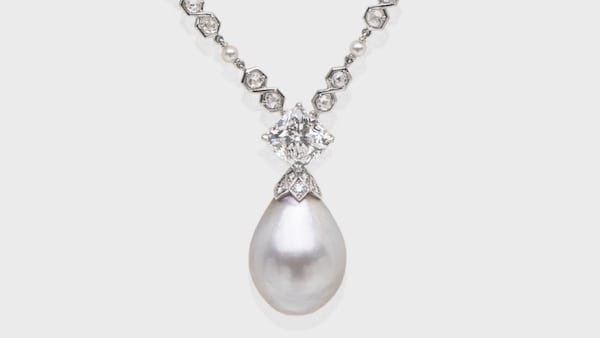
Queen Mary pearl: age dating & DNA fingerprinting
Similar to gemstones which are re-polished over time and thus need an updated SSEF report, we also occasionally receive pearls a second or third time for a new report, for example when the pearl is set in a new jewellery design. This is specifically the case when a pearl is important and/or of historical proven

The value of cultured pearls: evolution and current trends
Pearls are often reported as the oldest valuable gem known to humankind, and have been collected for at least 8,500 years (Ainis, et al., 2019). Natural pearls are accidental formations in wild oysters or mussels, and have been considered to be one of the most precious gems in many cultures (Kunz & Stevenson, 1