





Visit to Japan’s pearl farms
Having attended the IGC conference in Tokyo in October 2023, Dr. Michael S. Krzemnicki and Dr. Laurent E. Cartier took some time to travel south to visit the cultured pearl trading hub of Kobe and pearl farmers in Mie prefecture.

Exceptional non-nacreous pearls and pearl jewellery
Over the past few months, we have again analysed a number of outstanding, historic, or gemmologically interesting pearls. These include natural pearls from gastropods and non-nacreous shells.

SSEF GemTrack™: exceptional cases from the last few months
Since January 2019, SSEF offers the gem trade a tracking service and document, known as SSEF GemTrackTM. It not only allows the client to track a gemstone in time, but is also an attractive option for our clients to tell the story of the provenance of a specific and exceptional gemstone to their customers.
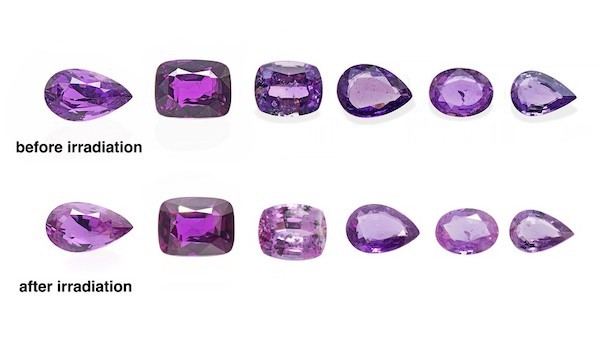
Effects of gamma irradiation on ruby and pink sapphire: an update
Gamma irradiation is a treatment method that may enhance the colour and visual appearance of gemstones, such as diamond, topaz, quartz, and corundum, to name a few. This treatment method uses strong gamma rays, either from radioactive isotopes like cobalt-60 (60Co) or from a linear accelerator (LINAC), to induc

Orange sodalite from Afghanistan
Sodalite, a complex tectosilicate with the ideal formula Na8Al6Si6O24Cl2 is known in the trade mostly as dark blue ornamental material, often as translucent to nearly opaque beads and cabochons, but in rare cases also as transparent faceted stones.
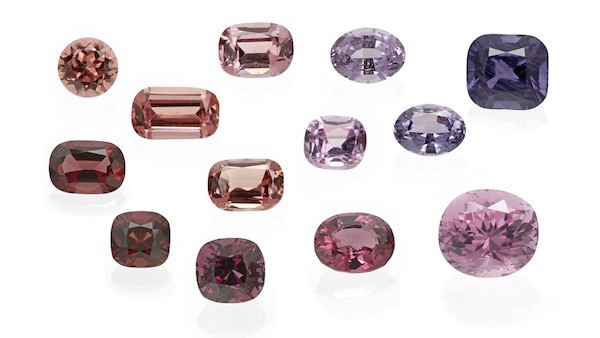
Spinel from Afghanistan
Since ancient times, the Badakhshan Province in northeastern Afghanistan has been known for its gem deposits, most prominently the lapis lazuli mines near Sar-e Sang in the Kokcha valley.and cabochons, but in rare cases also as transparent faceted stones.
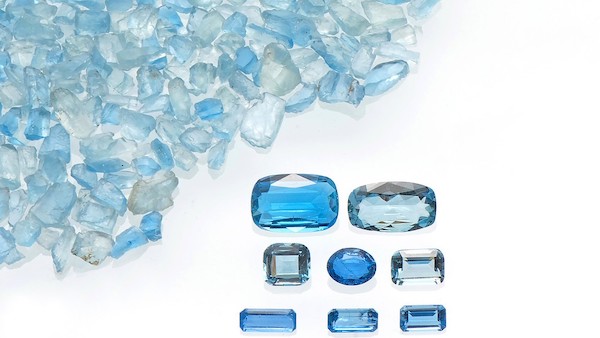
Afghanite from Badakhshan in Afghanistan
Afghanistan is known since ancient times as source of exceptional gems, namely lapis lazuli, tourmalines, beryls, rubies and spinel (Bowersox & Chamberlin 1995). Apart from these rather classic gemstones, Afghanistan is also source for numerous rare collector minerals, such as väyrynenite, triplite, bastnäs

Sapphires of ‘teal’ colour from Pein-Pyit, East Mogok
The Mogok area in northern Myanmar has been known as a major source of rubies and other gems since historic times. Often referred to as the ‘Mogok Stone Tract’, this gem-rich area is located within the central part of the Mogok Metamorphic Belt which forms part of a larger metamorphic belt structure, extend

Ruby with xenotime inclusion: age dating provides evidence of east african origin
Rubies from marble deposits are chemically rather similar, regardless of whether they originate from marbles in Myanmar, Vietnam, Tajikistan, or even from Tanzania or other countries in East Africa.
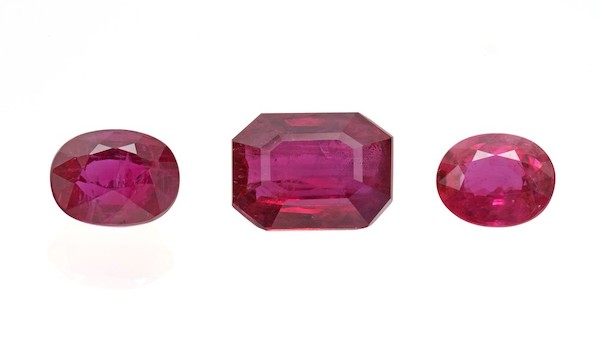
Successful dating of zircon inclusion in ruby despite intense heat-treatment
Age dating of zircon inclusions in rubies and sapphires can provide useful information for origin determination. Zircon is a mineral which usually incorporates uranium when it is formed, and this uranium is decaying to lead over time enabling age dating by measuring their ratio.