




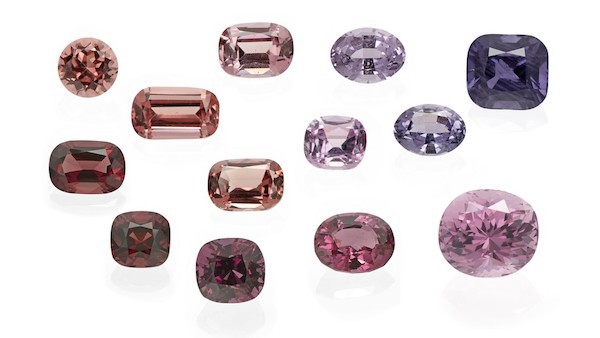
Spinel from Afghanistan
Since ancient times, the Badakhshan Province in northeastern Afghanistan has been known for its gem deposits, most prominently the lapis lazuli mines near Sar-e Sang in the Kokcha valley.and cabochons, but in rare cases also as transparent faceted stones.
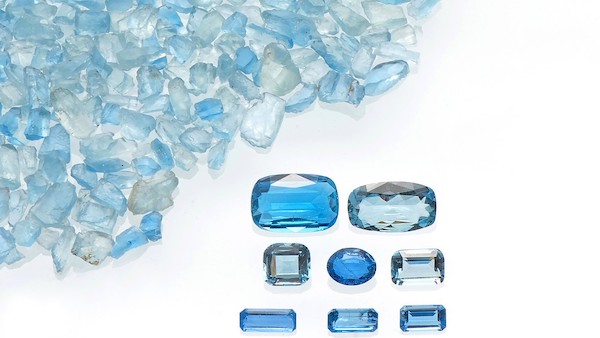
Afghanite from Badakhshan in Afghanistan
Afghanistan is known since ancient times as source of exceptional gems, namely lapis lazuli, tourmalines, beryls, rubies and spinel (Bowersox & Chamberlin 1995). Apart from these rather classic gemstones, Afghanistan is also source for numerous rare collector minerals, such as väyrynenite, triplite, bastnäs

Sapphires of ‚teal‘ colour from Pein-Pyit, East Mogok
The Mogok area in northern Myanmar has been known as a major source of rubies and other gems since historic times. Often referred to as the ‘Mogok Stone Tract’, this gem-rich area is located within the central part of the Mogok Metamorphic Belt which forms part of a larger metamorphic belt structure, extend

Ruby with xenotime inclusion: age dating provides evidence of east african origin
Rubies from marble deposits are chemically rather similar, regardless of whether they originate from marbles in Myanmar, Vietnam, Tajikistan, or even from Tanzania or other countries in East Africa.
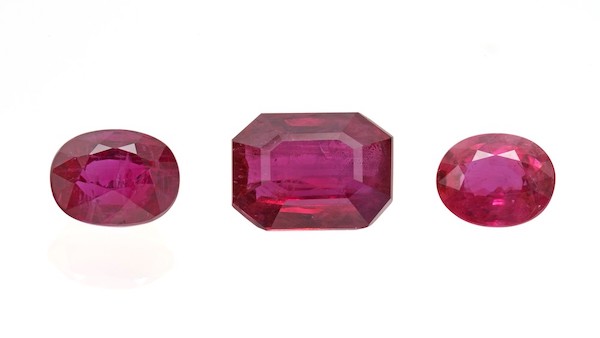
Successful dating of zircon inclusion in ruby despite intense heat-treatment
Age dating of zircon inclusions in rubies and sapphires can provide useful information for origin determination. Zircon is a mineral which usually incorporates uranium when it is formed, and this uranium is decaying to lead over time enabling age dating by measuring their ratio.

Anthill garnets from Arizona
Any gem hunter will tell you that collecting minerals from the soil is a hard job, especially if done in a remote place with rather dry and hot climate conditions and hard rocky soil. So, why not have small and hard-working animals such as ants do the work for you?
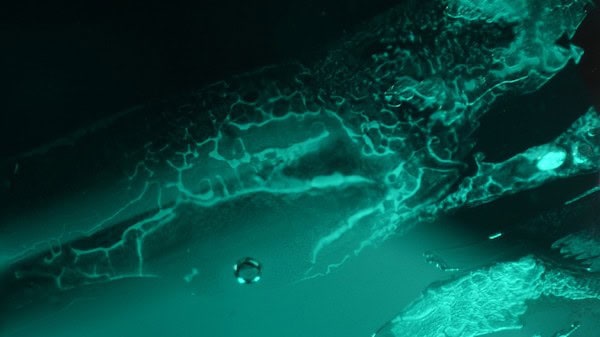
Bachelor thesis on fissure filling substances in emeralds
Fissures in emeralds are commonly filled with colourless substances such as oil, wax, or artificial resin to modify and enhance their clarity. This treatment is not new and has been known for many centuries, specifically with oil.
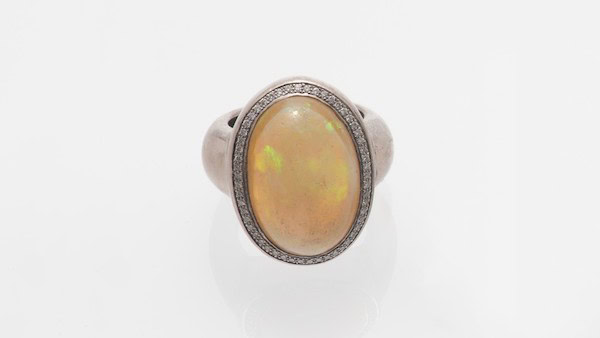
‚Thirsty‘ opal
Opal can be a very attractive and colourful gemstone. However, some opals, and especially certain samples from Ethiopia (but also from other sources) may show hydrophilic properties, thus absorb and release liquids (mostly water or even humidity in the air) to some extent.
Nickel-bearing type IA natural colourless diamond
In gemmology, nickel is generally associated with synthetic HPHT diamonds through the presence of the well-known nickel-related (Ni-related) centre at 883/885 nm, which is rarely present in natural diamonds.