Eclogitic orange-yellow diamonds coloured by the 480 nm band

By Dr. Michael Mintrone, first published in Facette 30 (March 2026)

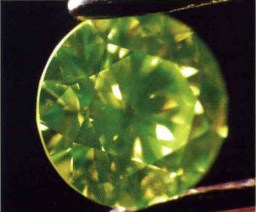
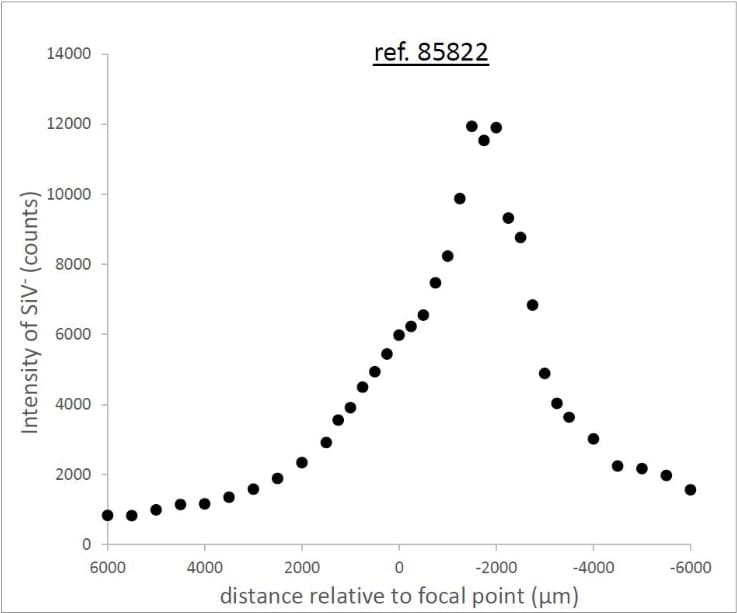
We recently acquired three orange-yellow diamonds for the SSEF collection research (Figure 1). These diamonds immediately retained our attention when we did the UV-vis-NIR spectra to identify the defect at the origin of their colour. The three diamonds appear to be coloured by an absorption band centred at ca. 480 nm (Figure 2). This band is known to occur in chameleon diamonds and in the rare natural fancy orange-coloured diamond. Therefore, studying these diamonds is very interesting as they are not frequently seen in the lab.
Figure 1: Three orange–yellow diamonds recently acquired for the SSEF research collection. Photo: SSEF.
Figure 2: Vis-NIR absorption spectra of the three diamonds with a major band centred at ~480 nm. The spectra were collected at liquid nitrogen temperature (-196°C) Figure: SSEF.
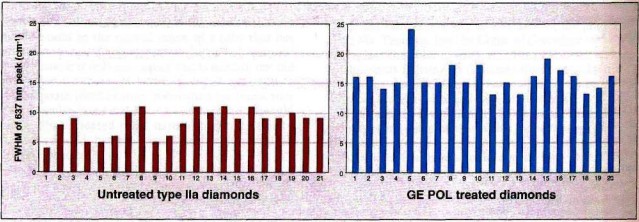
The three diamonds are type Ia with low to moderate nitrogen content. They show hydrogen-absorption features typical of those orange and yellow diamonds coloured by the 480 nm band. They contain numerous mineral inclusions ranging from micrometre to hundreds of micrometres in size. We analysed four of those inclusions that are located at or near the surface of these diamonds (Figure 3a). The Raman spectra of these inclusions clearly identify them as omphacite with the characteristic Raman main features located at ca. 340, 380, 515, 555, 682, and 1017 cm-1 (Figure 3b). Omphacite is a clinopyroxene representing one of the major constituents of eclogitic rocks.
Figure 3a: An omphacite inclusion selected for Raman analysis. Photo: M. Mintrone, SSEF. Figure 3b: Raman spectra of the analysed inclusions, identifying them as omphacite with characteristic bands at ~340, 380, 515, 555, 682, and 1017 cm-1. Figure: SSEF.

Eclogites are high-pressure metamorphic rocks that are generally formed during the subduction of an oceanic plate under a continental plate. During this process, magmatic rocks forming the oceanic plate are transformed into eclogite, while they are diving into the earth’s mantle due to the pressure increase. Eclogite represents also one of the two major diamond-forming rocks as peridotite.

Therefore, our results suggest that those three orange-yellow diamonds were formed in eclogitic rocks probably during the subduction of an oceanic plate in the earth’s mantle. These results are consistent with another study suggesting that orange-yellow diamonds coloured by the 480 nm band are related to eclogite.

This study illustrates the incredible story behind the natural diamond formation, in this orange-yellow diamond coloured by the 480 nm band is probably linked to plate tectonics which has facetted the appearance of our planet over the last 2.5 billion years.