




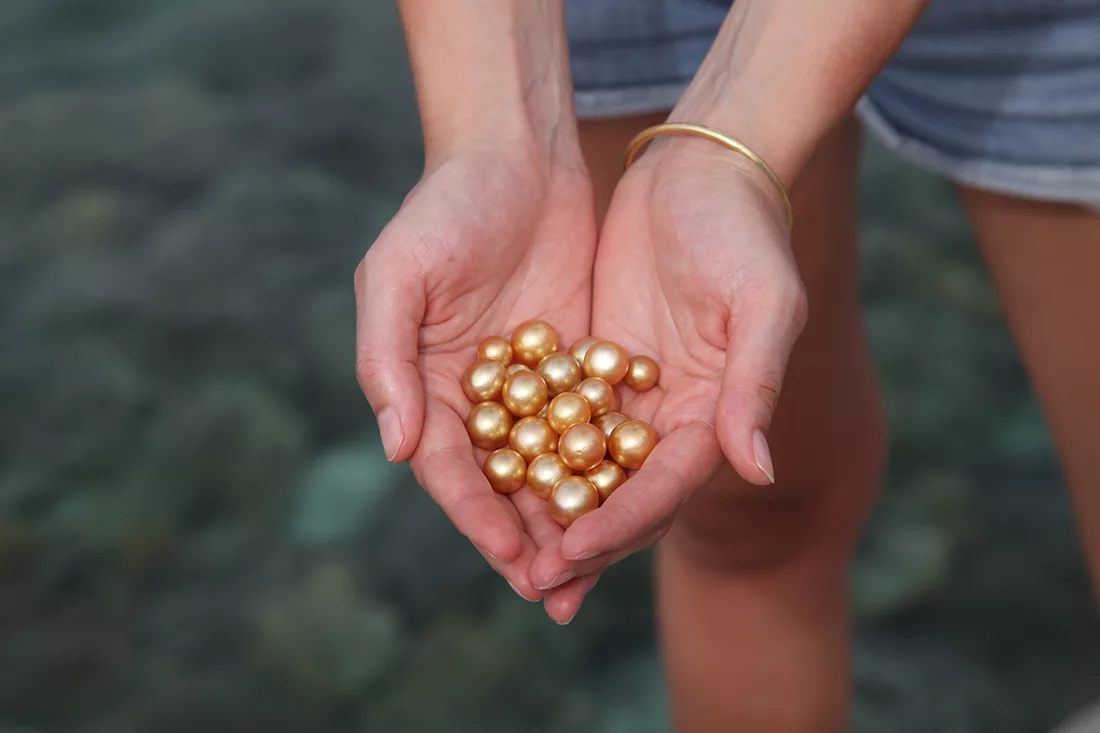
Research on Golden Cultured Pearls
In February 2016 Dr. Laurent Cartier had the opportunity of visiting Jewelmer pearl farms near Palawan Island in the Philippines and observing the different culturing techniques required to harvest golden South Sea pearls.
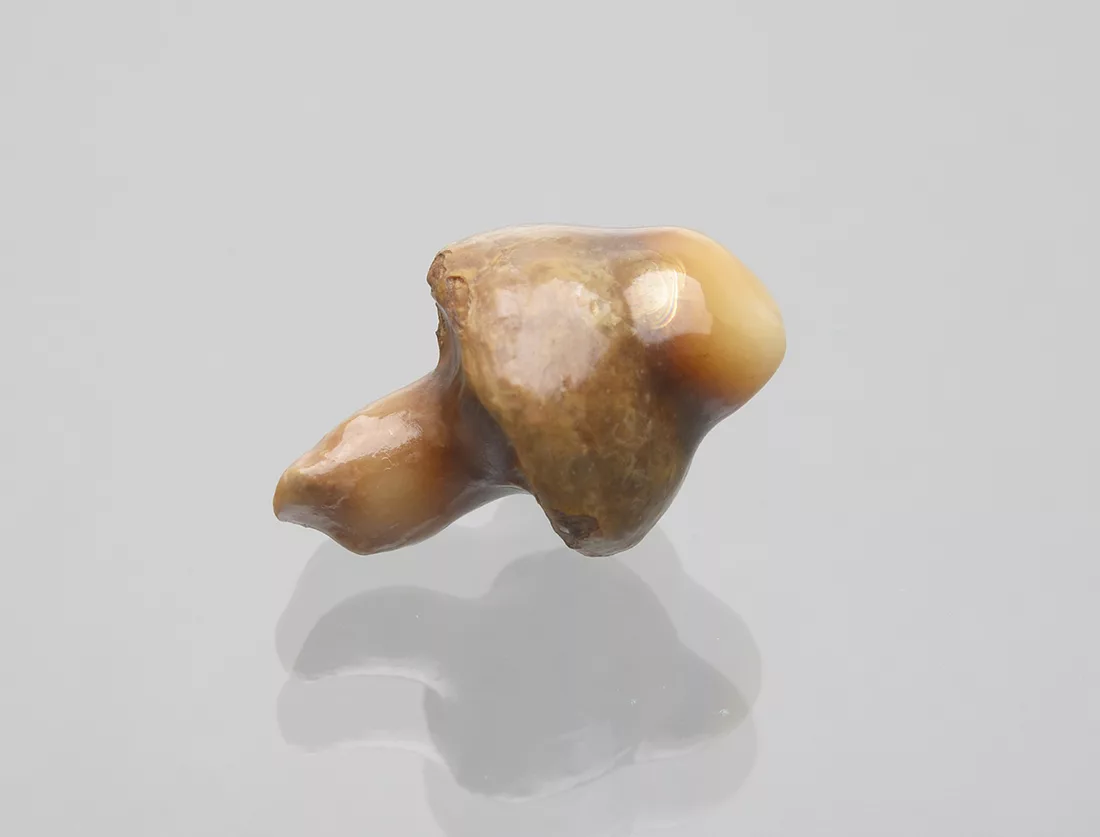
Strange Mushroom Pearl
by SSEF, first published in Facette 20 (January 2013) In 2012, we again received a number of pearls with strange shapes for testing. The most extravagant and intriguing of these curiosities of nature was a non-nacreous brownish natural pearl from a marine mollusc, which closely resembled a mushroom (see ph
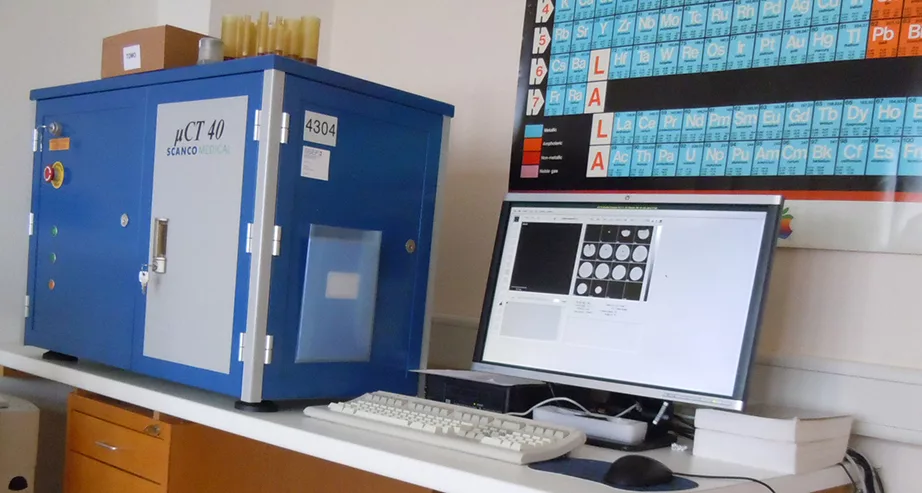
X-Ray Computed Microtomography at SSEF
by Dr. F. Herzog & M.S. Krzemnicki, first published in Facette 20 (January 2013) For the last few years SSEF has seen increased demand for analysis of pearls. This is not astonishing. On the one hand, the supply of natural pearls that grow or were grown without any human intervention is limited. On the oth
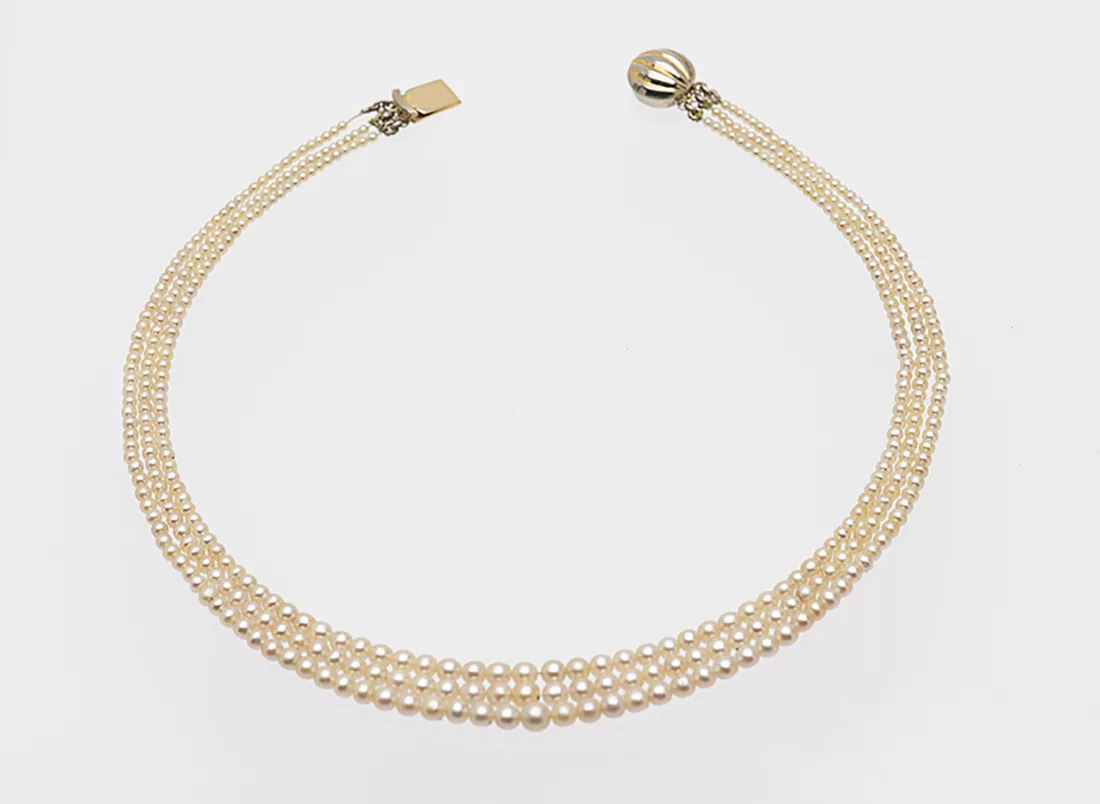
Fake Historic Provenance: ‘Aged ’ Cultured Pearls
Most recently, we received a pearl necklace with 410 pearls strung on three regularly graduated strands. The pearls were characterized by a beautifully matching colour and a fine pearl lustre, reminiscent of ‘classic’ natural pearls from the Arabian Gulf. However, a closer look using X-ray luminescence (SSE
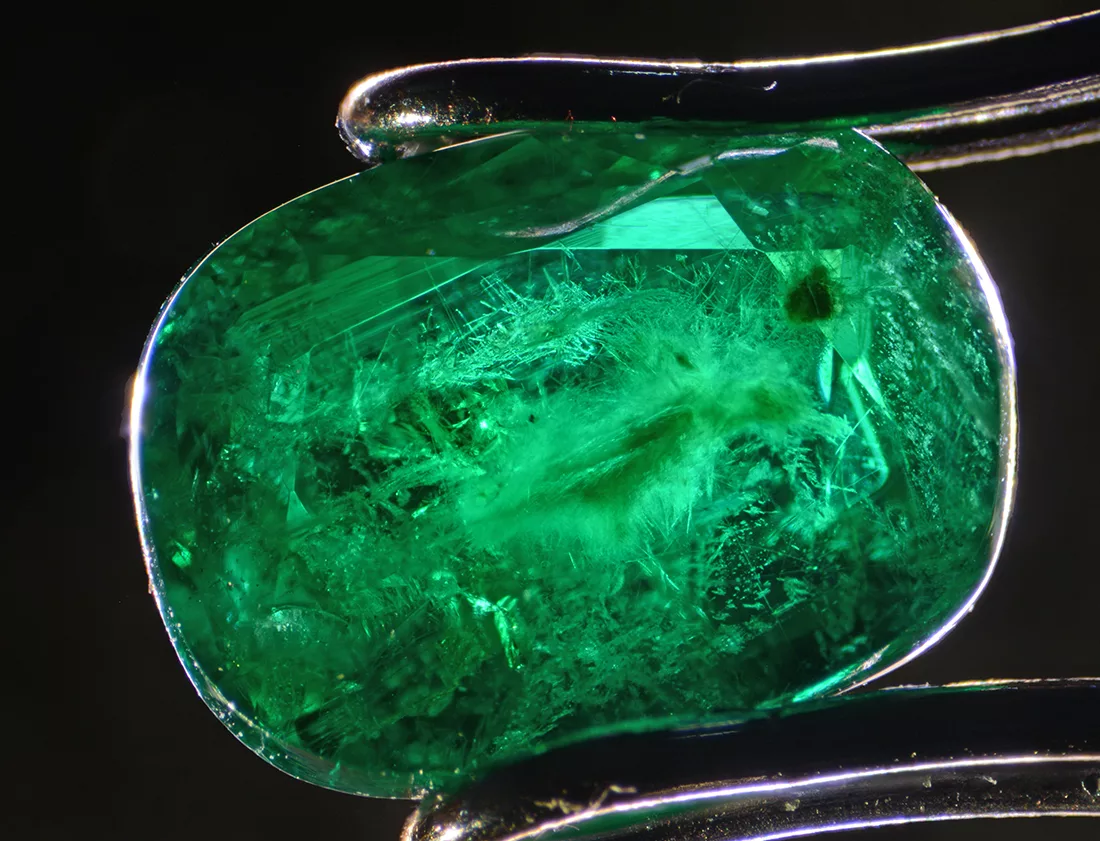
Neutron and X-Ray Tomography of Emeralds
Since two years, the SSEF has been working with the Laboratory for Neutron Scattering and Imaging at the Paul Scherrer Institute (PSI) using their ICON beamline (cold neutron imaging) at the SINQ spallation source. The aim of these research projects in collaboration with Dr. Lehmann and Dr. Mannes is to analyse
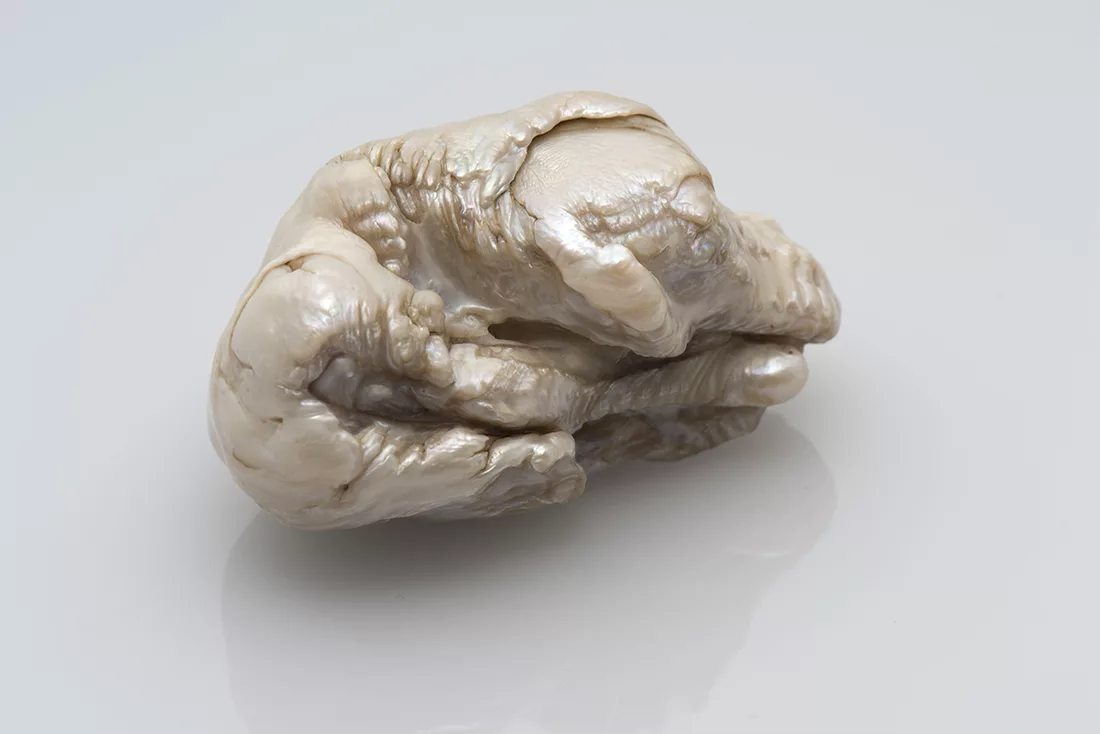
The historic ‘Sleeping Lion Pearl’, a natural Blister and not a Pearl
Recently, the Swiss Gemmological Institute SSEF had the opportunity to investigate an impressive natural nacreous formation with documented provenance dating back to the late 18th century, named the ‘Sleeping Lion Pearl’ due to its baroque shape that is reminiscent of a lion.
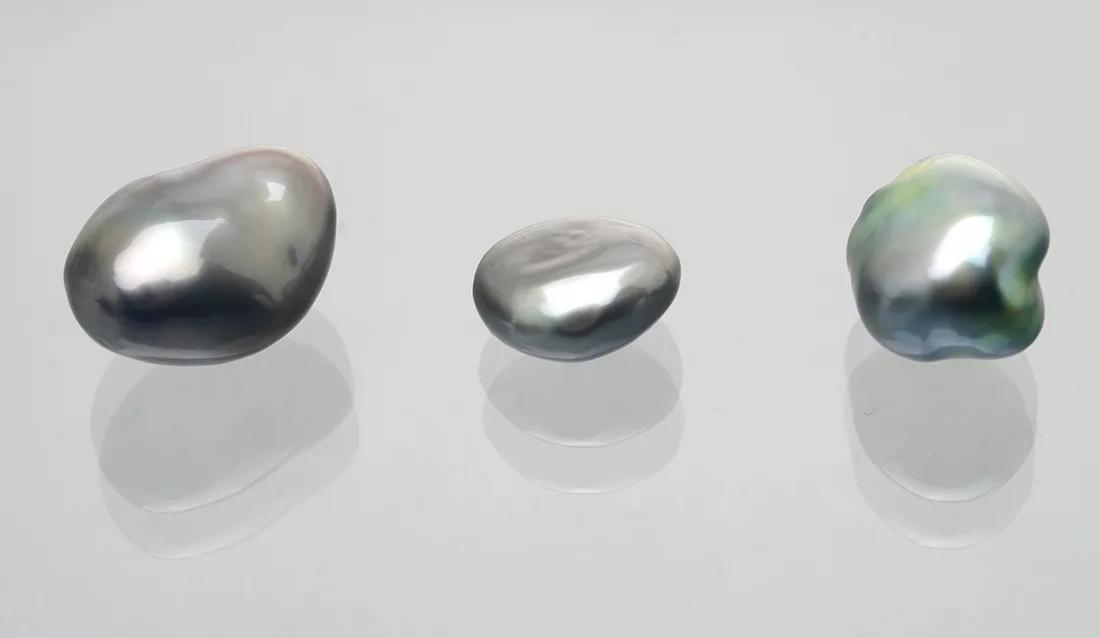
New Beads in Cultured Pearls
by Dr. Laurent E. Cartier, first published in Facette 21 (February 2014) We were presented with samples of a new type of pearl product from French Polynesia by a pearl trader during the 2012 BaselWorld show. These cultured pearls had unusual shapes, came in large sizes (up to 23 mm) and were characterised by
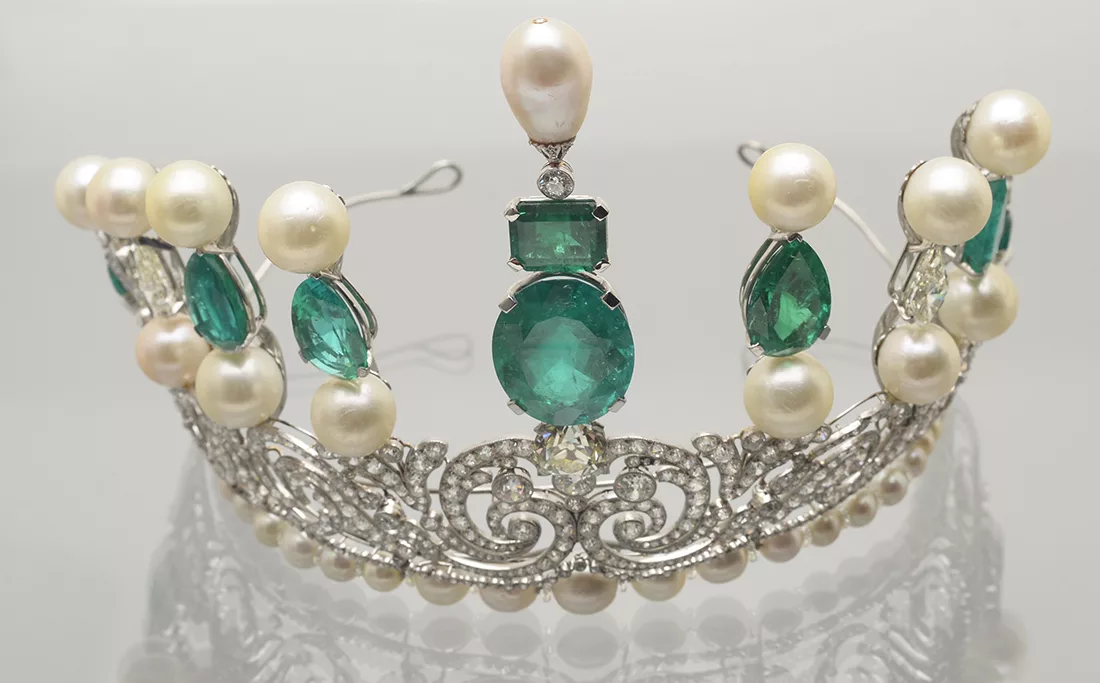
Corroded Pearls
by SSEF, first published in Facette 20 (January 2013) Although pearls, as organic gems, are commonly less stable than polished gemstones, we don’t often see pearls with obvious features of surface damage as a result of unfortunate care. A few months ago, however, we received for testing a very spectacular ca

New frontiers in pearl analysis: Age dating, DNA fingerprinting and novel radiographic methods (2019)
Presentation by Dr. Michael S. Krzemnicki and Jean-Pierre Chalain at the Pearl Symposium in Bahrain in November 2019.
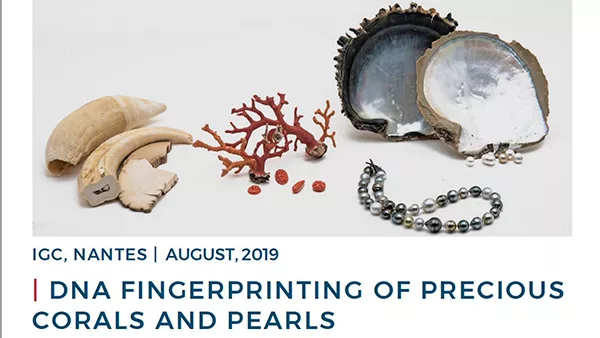
DNA fingerprinting of precious corals an pearls (2019)
Presentation by Dr. Laurent E. Cartier at the International Gemmological Conference (IGC) in Nantes (France) in August 2019.